Environmental
Environmental Dimension
The Company is committed to minimizing its environmental impact through effective energy, climate, and waste management. It has set targets to reduce energy consumption and Scope 1, 2, and 3 greenhouse gas emissions, while also promoting recycling throughout the organization.
The Company recognizes that climate change is a significant factor affecting its current and future business operations, particularly through physical risks, such as the increasing frequency and severity of natural disasters, rising temperatures, and sea-level rise. These risks may affect the Company’s assets, infrastructure, and operating performance. The Company also recognizes transition risks arising from changes in policies, regulations, and standards related to greenhouse gas emissions reduction, which may affect its operating costs and competitiveness.
To address these challenges, the Company has established key environmental targets, including achieving carbon neutrality by 2030 earlier than Thailand’s national target and achieving net-zero greenhouse gas emissions by 2065, in alignment with the national target.
Environmental Policies and Practices
The Company places importance on sustainable environmental management. It has established an Environmental and Energy Conservation Policy and appointed an internal energy management audit team. The Company has also appointed an environmental working group under its Environmental, Social and Governance Policy to jointly drive environmental initiatives across the organization.
These initiatives include campaigns to conserve electricity, water, and paper, as well as to reduce and segregate waste. Such actions contribute to reducing greenhouse gas emissions and raising environmental awareness among employees throughout the organization.
Environmental, Social and Governance Policy
Energy Conservation and Resource-Use Reduction Measures and Guidelines

Environmental, Social and Governance Policy

Energy Conservation and Resource-Use Reduction Measures and Guidelines
Company Position on Climate-related Public Policy and Regulation
Muang Thai Insurance Public Company Limited (MTI) recognizes that climate change is one of the key risks affecting society, the economy, and the insurance industry. The Company acknowledges the importance of reducing greenhouse gas (GHG) emissions and supporting Thailand’s transition toward a low-carbon economy in line with national climate goals.
To support climate-related public policy and regulation, the Company aligns its climate strategy and environmental management initiatives with Thailand’s climate policy framework and sustainable finance agenda, including:
Supported Policies and Frameworks
- Thailand’s Long-Term Low Greenhouse Gas Emission Development Strategy
- Thailand’s Net Zero GHG Emissions Target by 2050
- Thailand Greenhouse Gas Management Organization (TGO)’s carbon reduction and carbon credit mechanisms, including T-VER
- Thailand Taxonomy Framework for sustainable economic activities
- Sustainable finance and ESG-related initiatives promoted by the Securities and Exchange Commission (SEC Thailand) and the Stock Exchange of Thailand (SET)
How the Company Supports These Policies
The Company supports these climate-related policies and regulations through the following actions:
- Establishing greenhouse gas reduction targets covering Scope 1, Scope 2 and Scope 3 emissions.
- Committing to Net Zero greenhouse gas emissions for operational emissions for Scope 1, 2 and 3 emissions by 2050.
- Conducting annual greenhouse gas inventory and independent verification of greenhouse gas emission data.
- Implementing energy efficiency measures and expanding the use of renewable energy, including solar power generation at Company facilities.
- Integrating climate-related risks into the enterprise risk management framework and assessing both physical and transition climate risks.
- Supporting sustainable insurance practices and the development of products and services that enhance climate resilience and environmental sustainability.
- Participating in sustainability and ESG-related initiatives promoted by industry associations, regulatory agencies and relevant organizations.
Muang Thai Insurance Public Company Limited is a member of the Thai General Insurance Association (TGIA), which places significant importance on addressing and managing the impacts of climate change. The Association plays a key role in promoting knowledge sharing, best practices, and collaboration on climate-related risk management across the non-life insurance industry.
As a member, the Company participates in activities and initiatives organized by the Association to exchange knowledge, monitor emerging climate-related risk trends, and enhance risk management approaches for natural disasters that are becoming more frequent and severe due to climate change. In addition, the Company applies the knowledge and recommendations gained through its engagement with the Association to strengthen its risk assessment processes, underwriting practices, and internal awareness of climate change-related issues.
Environmental Targets and Performance
Target
Reduce electricity-related expenses by lowering electricity consumption by 5% by 2025,
compared with the 2023 baseline.
2023 Performance
Electricity consumption: 2,772,593 kWh
2024 Performance
Electricity consumption: 2,771,903 kWh
2025 Performance
Electricity consumption: 2,415,616 kWh
Electricity consumption decreased by 12.85%.
Target
Reduce water consumption by 5% by 2025,
compared with the 2023 baseline.
2023 Performance
Water consumption: 17,163 cubic metres
2024 Performance
Water consumption: 15,993 cubic metres
2025 Performance
Water consumption: 13,360 cubic metres
Water consumption decreased by 16.46%.
Target
Effectively manage waste within the organization by segregating at least 500 kilograms of recyclable waste by 2025.
2023 Performance
Recyclable waste segregated: 35.71 kilograms
2024 Performance
Recyclable waste segregated: 4,146 kilograms
2025 Performance
Recyclable waste segregated: 9,002.4 kilograms
Target
Reduce Scope 1, Scope 2, and Scope 3 greenhouse gas emissions by 5% by 2025, compared with the 2024 baseline.
2023 Performance
Greenhouse gas emissions had not yet been independently verified.
2024 Performance — First Year of Verification
Scope 1: 759 tCO₂e
Scope 2: 1,402 tCO₂e
Scope 3: 222.31 tCO₂e
Total: 2,383.31 tCO₂e
2025 Performance
Scope 1: 613.12 tCO₂e
Scope 2: 1,207.57 tCO₂e
Scope 3: 232.92 tCO₂e
Total: 2,053.61 tCO₂e
Total greenhouse gas emissions decreased by 13.3%
compared with the 2024 baseline.
🎯 Climate Targets
The Company is committed to reducing the environmental impacts of its operations through effective energy management, efficient resource use, greenhouse gas emissions reduction, and systematic waste management. The Company has established clear and ambitious climate targets as follows
1.Achieve carbon neutrality by 2030.
2.Achieve net-zero greenhouse gas emissions by 2050.
The Company integrates environmental considerations into all operational processes, promotes employee participation, and leverages digital technologies to enhance environmental performance.
Data verification note: Based on the figures provided, water consumption decreased by approximately 22.16% from the 2023 baseline, while 16.46% represents the decrease from 2024. Total GHG emissions decreased by approximately 13.83% from 2024, rather than 13.3%. These figures should be confirmed before publication.
Climate-related Risk and Opportunity Management
Muang Thai Insurance Public Company Limited recognizes climate change as a significant factor that presents both risks and opportunities for the non-life insurance business. Climate-related impacts may affect underwriting, claims management, premium pricing, capital management, reinsurance arrangements, investment activities, internal operations, as well as the Company’s ability to maintain business continuity and support customers during natural disaster events.
The increasing frequency and severity of natural disasters, including floods, storms, heavy rainfall, hailstorms, heatwaves, earthquakes, and extreme weather conditions, may lead to a rise in both the number and value of insurance claims. At the same time, the transition to a low-carbon economy, evolving climate-related regulations and policies, carbon pricing mechanisms, sustainability disclosure standards, and growing stakeholder expectations may affect the Company’s operations, customers, business partners, and investment portfolio.
To effectively manage these impacts, the Company discloses climate-related information with reference to the Task Force on Climate-related Financial Disclosures (TCFD) framework. The disclosures are structured around the four core pillars of the TCFD recommendations: Governance, Strategy, Risk Management, and Metrics & Targets. Through this framework, the Company aims to transparently and systematically communicate its approach to managing climate-related risks and opportunities, while strengthening business resilience and supporting sustainable long-term growth.
Climate Transition Plan
Muang Thai Insurance Public Company Limited is committed to managing climate-related risks and opportunities while reducing greenhouse gas (GHG) emissions from its operations and value chain. The Company aims to support the transition to a low-carbon economy and strengthen resilience against climate-related disasters.
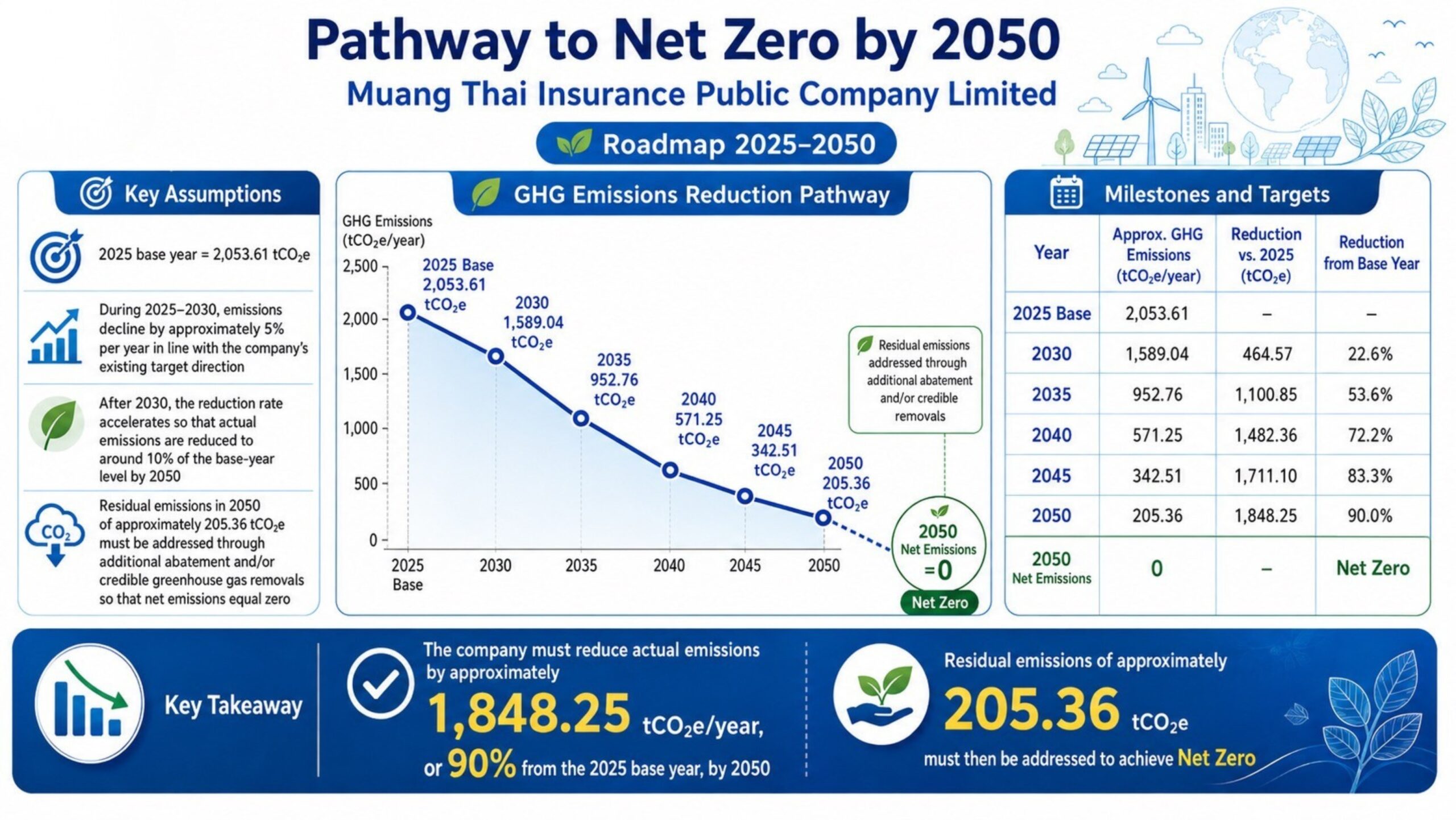
Long-term Target: Achieve Net Zero by 2050
The Company prioritizes actual emissions reductions as the primary approach and will address only residual emissions that cannot be further reduced through credible and verifiable carbon removal or offsetting mechanisms.
Time-Bound Targets
| Year | GHG Emissions (tCO₂e/year) | Reduction from Baseline (tCO₂e) | Reduction from Baseline (%) |
|---|---|---|---|
| 2025 (Baseline) | 2,053.61 | – | – |
| 2030 | 1,589.04 | 464.57 | 22.6% |
| 2035 | 952.76 | 1,100.85 | 53.6% |
| 2040 | 571.25 | 1,482.36 | 72.2% |
| 2045 | 342.51 | 1,711.10 | 83.3% |
| 2050 | 205.36 | 1,848.25 | 90.0% |
| Net Zero 2050 | 0 | – | Net Zero |
Key Measures to Deliver the Climate Transition Plan
The Company drives its Climate Transition Plan through six key strategic approaches:
1. Reducing Greenhouse Gas Emissions from Operations
- Install solar rooftop systems where appropriate.
- Reduce electricity consumption per employee by at least 15% by 2030.
- Reduce fuel consumption from the Company’s vehicle fleet by 20% by 2030.
- Reduce paper consumption by 30% by 2030.
- Increase waste recycling rates to at least 30% by 2030.
2. Integrating Climate Risk into Underwriting
- Conduct Climate Risk assessments for 100% of large property risks by 2030.
Expand the use of flood and natural catastrophe risk data across relevant underwriting lines.
3. Developing Insurance Products that Support a Low-Carbon Economy
- Continuously expand insurance solutions related to electric vehicles (EVs), renewable energy, and climate solutions.
- Ensure that products supporting the low-carbon transition account for at least 10% of newly developed products by 2030.
4. Advancing Sustainable Claims Management
- Increase the use of digital claims services.
- Reduce paper use in claims processes by 30% by 2030.
- Promote remote survey and assessment technologies to reduce travel-related emissions.
5. Integrating Climate and ESG Factors into Investment and Supplier Management
- Assess ESG and climate-related risks for new investment assets.
- Increase the proportion of key suppliers that have undergone sustainability assessments to 80% by 2040.
- Promote investments that support climate adaptation and the transition to a low-carbon economy.
6. Strengthening Climate Resilience and Adaptation
- Conduct Climate Scenario Analysis and Stress Testing on a regular basis.
- Expand natural catastrophe risk assessments in high-risk areas.
- Provide customers with guidance and information to help prevent and mitigate climate-related losses.
Monitoring and Performance Tracking
The Company monitors progress through key performance indicators (KPIs), including:
- Scope 1, Scope 2, and Scope 3 greenhouse gas emissions
- Renewable energy consumption ratio
- Electricity and fuel consumption
- Paper consumption and recycling rates
- Number of climate-related insurance products and solutions
- Proportion of insurance portfolios assessed for Climate Risk
- Proportion of investments evaluated against ESG and climate criteria
- Proportion of suppliers assessed for sustainability performance
Through this Climate Transition Plan, Muang Thai Insurance aims not only to reduce its own greenhouse gas emissions, but also to leverage its role as a non-life insurer to help customers mitigate risks, enhance resilience, adapt to climate change, and support Thailand’s transition toward a more sustainable and low-carbon future.
Operational Targets
- Achieve Carbon Neutrality by 2030 and Net Zero Greenhouse Gas Emissions by 2050.
- Reduce greenhouse gas emissions across Scope 1, Scope 2 and Scope 3 by at least 5% per year from the 2024 baseline.
- Increase the use of renewable and clean energy throughout the Company’s operations.
- Enhance the Company’s climate risk assessment capabilities and continuously refine underwriting guidelines to address emerging climate-related risks.
- Support the integration of climate-related considerations into business operations, risk management, and decision-making processes.
1. Governance
The company integrates climate-related governance into its sustainability governance and enterprise risk management structure. The Board of Directors oversees the overall direction, policy, strategy and long-term objectives related to sustainability and climate change to ensure responsible business growth and long-term value creation.
The Corporate Governance and Sustainable Development Committee oversees ESG strategy, sustainability targets, material topics, climate-related risks and opportunities, and sustainability disclosure. The Risk Management Committee oversees the integration of climate risk into enterprise risk management, including Risk Appetite, Risk Tolerance, Risk Limit, stress testing, business continuity planning, capital adequacy and reinsurance arrangements.
Climate Governance Structure
Governance Level | Roles and Responsibilities |
Board of Directors | Oversees sustainability and climate-related direction, policies and long-term value creation |
Corporate Governance and Sustainable Development Committee | Oversees ESG strategy, climate-related material topics, environmental targets and sustainability disclosure |
Risk Management Committee | Oversees climate risk integration into ERM, Risk Appetite, stress testing, capital adequacy and reinsurance |
Audit Committee | Oversees data reliability, internal controls and disclosure integrity |
Management | Translates policies and strategies into action plans across business, underwriting, investment, claims and operations |
E / S / G Working Teams | Implement initiatives, monitor performance and report progress |
Corporate Governance and Sustainability Function | Coordinates, advises, consolidates data, monitors performance and supports sustainability reporting |
The company applies the Three Lines of Defense model. Business units and risk owners identify and manage climate-related risks in their day-to-day operations. Risk, compliance and sustainability functions provide frameworks, oversight and monitoring. Internal Audit provides assurance on the effectiveness of controls and reporting processes.
2. Strategy
The company applies a “Climate Change Risk to Strategy” approach by treating climate change as both a risk and an opportunity. Climate-related risks may affect claims, premiums, reserves, reinsurance, investment portfolios and operating costs. At the same time, growing awareness of natural hazards and the transition to a low-carbon economy create opportunities to develop new products and services that respond to customer and societal needs.
The company has set long-term ambitions to achieve Carbon Neutrality by 2030 and Net Zero by 2050, in line with Thailand’s long-term climate direction. It also sets short- and medium-term targets for greenhouse gas reduction, energy, water, fuel, paper, waste management and climate-related insurance products.
Key Climate-related Risks and Opportunities
Type | Description | Business Impact | Strategic Response |
Physical Risk | Floods, storms, hail, drought, heatwaves and severe natural hazards | Higher claims, higher loss ratio, exposure to customer assets, offices, branches and partners | Flood risk mapping, catastrophe modelling, stress testing, reinsurance and customer advisory |
Transition Risk | Climate laws, carbon pricing, ESG disclosure requirements, new technology and changing customer behavior | Higher compliance costs, higher risk for some customers, potential investment portfolio impacts | Responsible investment, ESG screening, green insurance and transition risk assessment |
Liability Risk | Claims or disputes related to environmental or climate-related impacts | Claims, reputation and customer trust risks | Policy wording review, fair communication and fair customer treatment |
Operational Risk | Natural hazards affecting offices, branches, IT systems, call centers and claims operations | Business interruption and service disruption during disasters | BCP, crisis response, digital claims and 24-hour service channels |
Climate Opportunity | Growing demand for natural catastrophe insurance, EV insurance, solar rooftop insurance and low-carbon products | New revenue opportunities, competitiveness and reduced protection gap | Green insurance, climate solutions, E-policy, climate advisory and inclusive insurance |
Business Integration
Product Development
The company integrates ESG considerations into product design by considering both business value and social value. Examples include EV insurance, EV charger insurance, solar rooftop insurance, natural catastrophe-related property insurance, E-policy and products that help reduce the protection gap for underserved groups.
Underwriting
The company incorporates ESG and climate-related criteria into underwriting considerations, such as whether a customer is located in a flood-prone area, whether flood prevention measures are in place, whether fire protection systems are adequate, whether compliance records are satisfactory, and whether emergency plans exist. This enables more accurate risk selection, pricing and coverage conditions.
Claims Management
The company develops sustainable claims management through paperless processes, remote survey, digital claims and AI-enabled claims processes to improve efficiency, reduce travel, reduce paper consumption, lower carbon footprint and enhance customer experience.
Responsible Investment
The company incorporates ESG factors into investment decision-making, shifting from a traditional Return and Risk approach to a Return + Risk + ESG Factors approach. Considerations include whether investee companies have carbon transition plans, good governance, ESG controversies or high exposure to carbon-intensive activities.
3. Risk Management
The company integrates climate-related risks into enterprise risk management through three key steps: risk identification, risk assessment and prioritization, and risk response.
3.1 Risk Identification
The company identifies climate-related risks from both internal and external factors, covering underwriting risk, investment risk, operational risk, compliance risk, reputational risk and emerging risk. Key risks include floods in high-risk areas, severe storms and heavy rainfall leading to higher claims, climate-related laws, carbon pricing, ESG disclosure requirements, carbon-intensive investment exposure and the ability to serve customers during disasters.
3.2 Risk Assessment and Prioritization
The company assesses climate-related risks based on likelihood and impact across multiple dimensions, including insurance revenue, claims, loss ratio, combined ratio, capital adequacy, reinsurance, investments, operating costs, customer service and reputation.
Assessment Dimension | Examples |
Underwriting | Frequency and severity of natural hazards, pricing, underwriting guidelines and coverage conditions |
Claims | Claim frequency, claim severity, claim closure time and disaster response capability |
Finance and Capital | Loss ratio, combined ratio, reserves, capital adequacy and reinsurance cost |
Investment | Transition risk impact on investment assets and carbon-intensive businesses |
Operations | Offices, branches, IT systems, call centers, partners and business continuity |
Customer and Reputation | Customer satisfaction, complaints, trust and corporate reputation |
3.3 Risk Management Tools and Measures
Tool / Measure | Application |
Flood Risk Mapping | Supports underwriting and portfolio risk management |
Catastrophe Model | Estimates disaster-related losses and portfolio impacts |
Stress Test | Tests the impact of severe scenarios on claims, capital and business continuity |
Climate Scenario Analysis | Assesses impacts under 1.5°C, 2°C and severe physical risk scenarios |
Reinsurance / Excess of Loss | Limits large catastrophe losses to an acceptable level |
Property Risk Survey | Assesses insured premises, PML / EML, loss history and risk improvement actions |
Risk Improvement Report | Provides customers with recommendations on fire protection, electrical inspection, thermoscan, hot work permits and emergency planning |
Business Continuity Plan | Prepares offices, branches, IT systems and customer service channels for disaster events |
Climate Advisory | Provides customers with advice on flood risk, loss prevention, early warning and disaster support |
3.4 Climate Scenario Analysis
The company uses climate scenario analysis to assess medium- and long-term impacts on insurance and investment portfolios. Scenarios consider temperature pathways such as 1.5°C and 2°C, as well as historical disaster data, rainfall patterns and flood-related losses. The analysis supports the assessment of natural hazard risk, claims frequency, claims severity, reserve adequacy and investment value impacts.
4. Metrics and Targets
The company monitors climate-related and resource efficiency performance through quantitative metrics and targets covering greenhouse gas emissions, energy, fuel, water, paper, waste, climate-related products, E-policy and ESG investments.
4.1 Key Targets
Topic | Target |
Carbon Neutrality | By 2030 |
Net Zero | By 2050 |
GHG Reduction | Reduce greenhouse gas emissions by 5% compared with the base year |
Fuel Consumption | Reduce gasoline by 5% and diesel by 2% compared with the base year |
Water Consumption | Reduce water consumption by 5% compared with the base year |
Waste Management | Increase recycled waste by at least 500 kg |
Climate Solutions | Promote clean energy insurance and climate solutions of at least 10,000 policies |
Responsible Investment | Maintain ESG-qualified investments at no less than 80% |
E-Policy | Promote at least 20,000 E-policy policies |
4.2 Greenhouse Gas Performance
Metric | Unit | 2024 | 2025 | Change |
Scope 1 | tCO2e | 759.00 | 613.12 | -19.22% |
Scope 2 | tCO2e | 1,402.00 | 1,207.57 | -13.70% |
Scope 3 | tCO2e | 222.31 | 232.92 | +4.56% |
Total Scope 1+2+3 | tCO2e | 2,383.31 | 2,053.61 | -13.30% |
In 2025, total greenhouse gas emissions decreased by 13.30% compared with 2024, mainly driven by reductions in Scope 1 and Scope 2 emissions.
4.3 Energy, Water and Resource Performance
Metric | Unit | 2023 | 2024 | 2025 | 2025 Change |
Purchased electricity | kWh | 2,783,846 | 2,771,903 | 2,415,616 | -12.85% |
Renewable electricity | kWh | 13,027.17 | 18,560.37 | 64,835.11 | +71.31% |
Total electricity | kWh | 2,796,873.17 | 2,790,463.37 | 2,480,451.11 | -11.11% |
Water consumption | m³ | 17,163 | 15,993 | 13,360 | -16.46% |
Reused / recycled waste | kg | 6,128.71 | 4,146.00 | 9,002.40 | +53.95% |
Paper consumption | reams | 61,150 | 39,915 | 42,250 | +5.85% |
The Company has implemented key measures to mitigate climate-related impacts, including installing solar photovoltaic systems, replacing conventional lighting with LED lighting, upgrading or improving cooling systems, installing electric vehicle charging stations, and promoting the efficient use and management of resources and waste, including water, electricity, fuel, paper, waste, and other discarded materials.
The Company also plans to replace its pool vehicles and executive vehicles with alternative-energy vehicles in the future, including supporting the use of electric motorcycles by claims surveyors.
4.4 Climate-related Products and Responsible Investment
Metric | Performance |
Total ESG products | 25,791 policies |
Environmental products | 10,516 policies |
ESG product premium | THB 478.1 million |
ESG product claims incurred | THB 287.9 million |
Green insurance / climate solutions | 7,247 policies |
E-policy | 27,990 policies |
ESG-qualified fixed income portfolio | 90.11% |
ESG-qualified listed equity portfolio | 87.33% |
Going forward, the company will further develop climate-related risk metrics, including the number of property risk surveys, risk assessment reports, risk improvement reports, flood-risk assessed locations, catastrophe-related policies, natural hazard loss ratios and investment exposure to carbon-intensive activities. These metrics will strengthen the company’s ability to link climate-related risks and opportunities with financial impacts and long-term business resilience.

Carbon Footprint for Organization (CFO) Management
Muang Thai Insurance Public Company Limited recognizes the importance of managing the environmental impacts arising from its business operations, particularly greenhouse gas emissions, which are closely linked to climate-related risks and opportunities. The Company therefore conducts its Carbon Footprint for Organization (CFO) assessment on an ongoing basis. The assessment provides baseline data for setting targets, reducing environmental impacts, and enhancing the Company’s climate action in alignment with international standards and government policies.
The Company began collecting data and conducting verification in 2024 and has continued the process since then. In 2025, the Company collected data and reported its greenhouse gas emissions in accordance with the requirements of the Thailand Greenhouse Gas Management Organization (Public Organization), or TGO.
The assessment applied the operational control approach and covered activities across all head office buildings during the reporting period from 1 January to 31 December 2025. Verification is scheduled for the second and third quarters of 2026 and will be conducted by an independent external assurance provider at a limited assurance level, with a materiality threshold of 5%. This process is intended to enhance stakeholder confidence in the accuracy and reliability of the disclosed information.
The 2025 assessment found that the Company’s Scope 1 greenhouse gas emissions amounted to 613.12 tonnes of carbon dioxide equivalent (tCO₂e). These emissions primarily arose from fuel consumption for electricity generators and fire-water pump systems, the use of company vehicles, and fugitive emissions from refrigerants and fire-suppression agents. Scope 1 emissions decreased from 2024 as a result of the Company’s various reduction measures.
Scope 2 emissions arising from electricity consumption amounted to 1,207.57 tCO₂e, representing a decrease from 2024, also as a result of the Company’s environmental and energy-efficiency measures. Consequently, the Company’s combined Scope 1 and Scope 2 emissions for the reporting year totalled 1,820.69 tCO₂e.
The Company’s greenhouse gas emissions profile reflects the nature of the insurance business, which does not generate emissions from manufacturing processes but primarily relies on electricity for office operations. The Company therefore focuses on improving energy efficiency, enhancing building management, and applying digital technologies to reduce resource consumption and control greenhouse gas emissions over the long term.
Regarding Scope 3 emissions, the Company is currently at an early stage of developing its management approach. In 2025, the Company reported Scope 3 emissions associated with its organizational operations, amounting to 232.92 tCO₂e.
The Company recognizes that Scope 3 emissions-particularly insurance-associated and investment-related emissions-may be significant to the business over the long term. It therefore plans to develop methodologies for assessing and managing greenhouse gas emissions throughout its value chain. This will support disclosures in accordance with international standards, including IFRS S2, as well as future climate-related legal and regulatory requirements.
The preparation of the CFO inventory extends beyond greenhouse gas emissions reporting. It serves as an important management tool supporting the formulation of the Company’s environmental strategy, the establishment of emissions-reduction targets, and the transition towards sustainable business operations.
The Company is committed to using CFO data as a foundation for systematically developing its climate action plan, balancing business growth with social responsibility and environmental stewardship, and creating sustainable value for all stakeholder groups.

Third-Party Verification
Verification Provider : Bureau Veritas Certification (Thailand)
Verification Results
- No material misstatements exceeding the 5% threshold were identified.
- Two non-conformities (NCs) and one misstatement (MS) were identified; all were corrected and closed.
- The accuracy of the CFO figures was confirmed in accordance with TGO criteria.

Resource Efficiency
Significance to the Organization
Effective management of energy, water, and waste plays an important role in reducing operating costs, mitigating risks associated with unnecessary resource consumption, and supporting the achievement of the Company’s net-zero target. Encouraging resource-conscious behaviour among employees is therefore a key component in driving the Company’s resource-efficiency measures.
Energy Management
In 2025, the Company continued to implement energy management measures aimed at reducing electricity consumption within its offices and fostering energy-conscious behaviour among employees. Internal awareness campaigns included messages such as “Switch It Off,” “Turn Off the Lights During Lunch Breaks and When Not in Use,” and “Unplug Before Leaving the Office.” These initiatives were designed to encourage energy-saving discipline in the daily routines of employees at all levels.
The Company also conducted energy-saving campaigns during extended holidays, such as Songkran and New Year, when most employees were away from the office. Inspection teams were assigned to check the premises before building closures, while all departments were reminded to switch off unnecessary electrical equipment to prevent avoidable energy consumption.
The Company established a standard air-conditioning temperature range of 25–27°C, in accordance with government guidelines, and installed reminder signs at relevant locations. This measure promotes consistent temperature settings and reduces the workload of cooling systems. The Company also promotes the combined use of natural daylight and artificial lighting by adjusting workspaces to allow more daylight into office areas, thereby reducing reliance on electricity during daytime hours.
These measures have helped the Company reduce electricity consumption and operating costs while maintaining a suitable and comfortable working environment.
Water Management
The Company recognizes the importance of efficient water use in reducing water loss and supporting sustainable water-resource management. It therefore regularly inspects and repairs leaks within its water-supply systems. Monthly building inspection plans have been established, and maintenance teams are assigned to resolve identified issues within specified timeframes.
To increase employee awareness, the Company has developed communication materials providing practical guidance on efficient water use, such as turning off taps after use and avoiding leaving water running unnecessarily. Reminder signs have also been installed in water-use areas to encourage responsible water-consumption habits in employees’ daily routines.
The Company also conducted water-saving campaigns in restrooms, encouraging employees to use flushing systems appropriately under the message “One Flush per Use.” This initiative aims to prevent unnecessary water consumption and effectively reduce water use within office buildings.
Legal and Regulatory Compliance
In addition to promoting efficient water use, the Company places considerable importance on wastewater management and the prevention of environmental impacts. Wastewater quality is strictly controlled in accordance with engineering principles and applicable legal requirements to ensure that discharges from office buildings do not adversely affect surrounding communities or ecosystems.
The Company manages wastewater through a treatment system that is continuously monitored and maintained. The system’s performance is inspected regularly through measures including cleaning treatment tanks, controlling incoming and outgoing water-flow rates, and properly managing chemicals used in the treatment process. These measures help maintain system stability and reduce contamination risks, particularly during periods of high water use within the buildings.
To oversee water quality, the Company regularly monitors wastewater discharges by submitting water samples to laboratories accredited in accordance with international standards. Parameters tested include pH, biochemical oxygen demand (BOD), chemical oxygen demand (COD), suspended solids (SS), and other parameters prescribed by the Ministry of Natural Resources and Environment.
All monitoring results are documented and reported to the environmental function and relevant committees. The results are used to continuously improve the efficiency of the wastewater treatment system and prevent the discharge of wastewater that does not meet applicable standards.
The Company complies with all legal requirements concerning wastewater and environmental quality, including the Public Health Act, the Enhancement and Conservation of National Environmental Quality Act, and applicable local wastewater-control ordinances. All supporting documents, monitoring results, and evidence are systematically retained for inspections by government authorities. The Company also maintains transparent records that can be traced and reviewed retrospectively.
Waste Management
The Company is committed to reducing waste generated from its operations to minimize long-term environmental impacts. Its approach systematically covers waste reduction, reuse, and recycling.
Performance Targets
- Increase the proportion of recyclable waste.
- Reduce paper consumption.
Enhancing Sustainable Waste Management Efficiency
The Company continuously collects data on waste generated within its offices. The data are analysed to identify trends, establish waste-reduction measures, and increase the proportion of waste diverted for recycling.
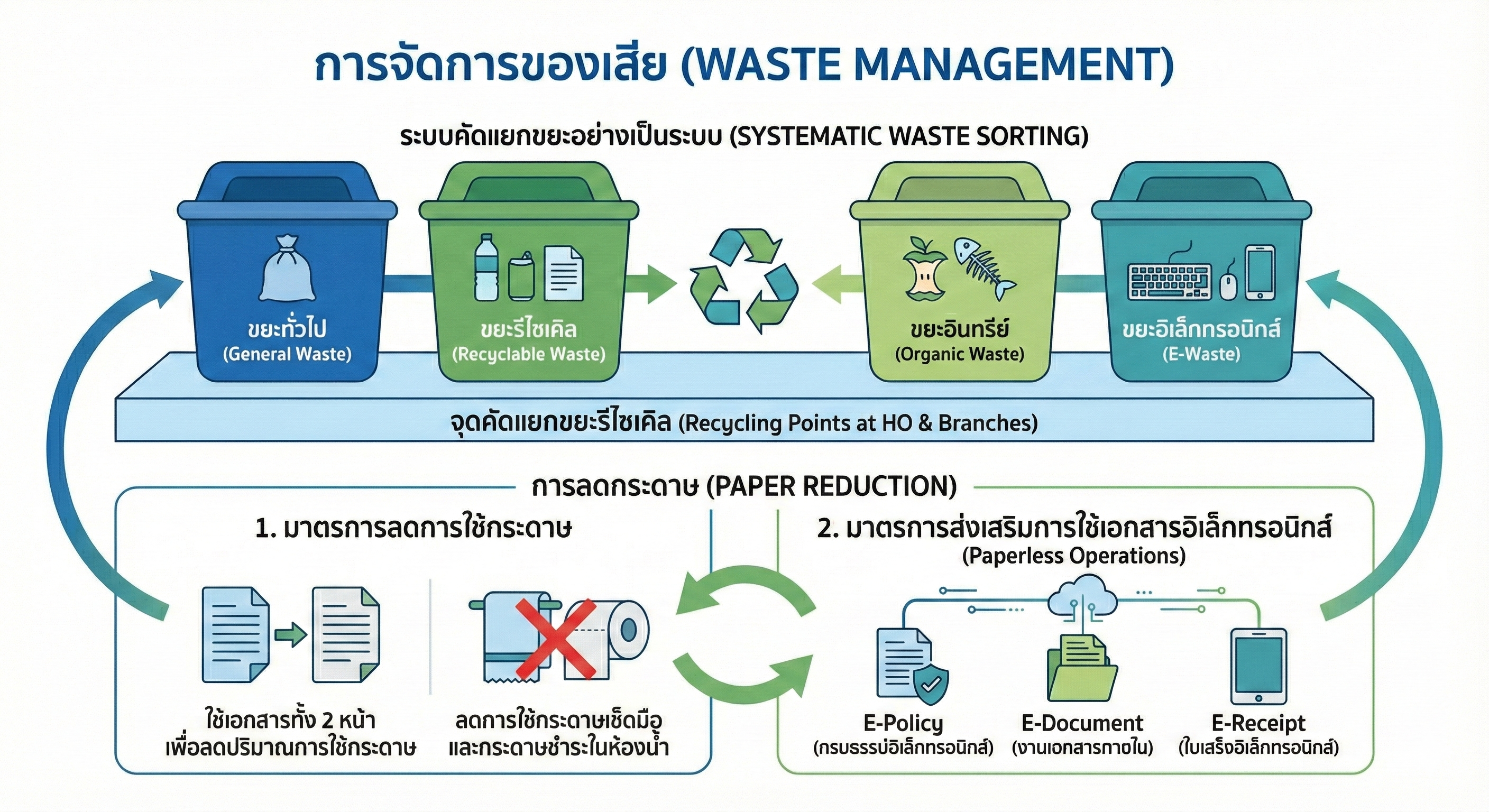
Waste-segregation stations have been established at the head office and branches, covering key waste categories, including:
- General waste
- Recyclable waste
- Organic and food waste
- Electronic waste
This systematic approach increases resource recovery and reuse, reduces the amount of waste requiring disposal, and supports the Company’s objective of sustainably minimizing its environmental impacts.
The Company segregates waste and submits waste data to the “Muang Thai Zero Waste” project to establish a centralized organizational waste-management database and develop measures that promote the efficient use of resources.
The Company has also introduced activities that create value from used materials, such as donating non-winning lottery tickets for the production of funeral sandalwood flowers and collecting electronic waste for proper recycling, treatment, and disposal. These initiatives promote the concept of maximizing the value derived from resources.
Additional segregated waste bins have been installed at four locations within the office and major branches:
- In front of the Customer Service Centre at the head office
- Business Development Group
- Floors 2–4 of the head office building
- First floor of Building 4
Paper Reduction and Reuse
To support waste reduction and conserve natural resources, the Company implemented an A4 paper reuse initiative. Employees are encouraged to reuse single-sided paper for internal documentation. This initiative helps reduce purchases of new paper and significantly decreases the amount of paper waste requiring management.
Reducing the Use of Paper Hand Towels
The Company developed the “#ReduceTreeCutting” awareness campaign to raise employee awareness of environmental impacts. Hand dryers have also been piloted in selected areas to reduce the consumption of disposable materials.
Promoting Electronic Documents and Paperless Operations
The Company is actively advancing its paperless policy by expanding the use of electronic systems, including:
- E-Policy: Electronic insurance policies
- E-Document: Electronic internal documentation
- E-Receipt: Electronic receipts
This digital transition continues to reduce paper consumption across operational processes while improving efficiency, convenience, and speed of customer service. It also helps reduce carbon emissions associated with the transportation and delivery of physical documents.
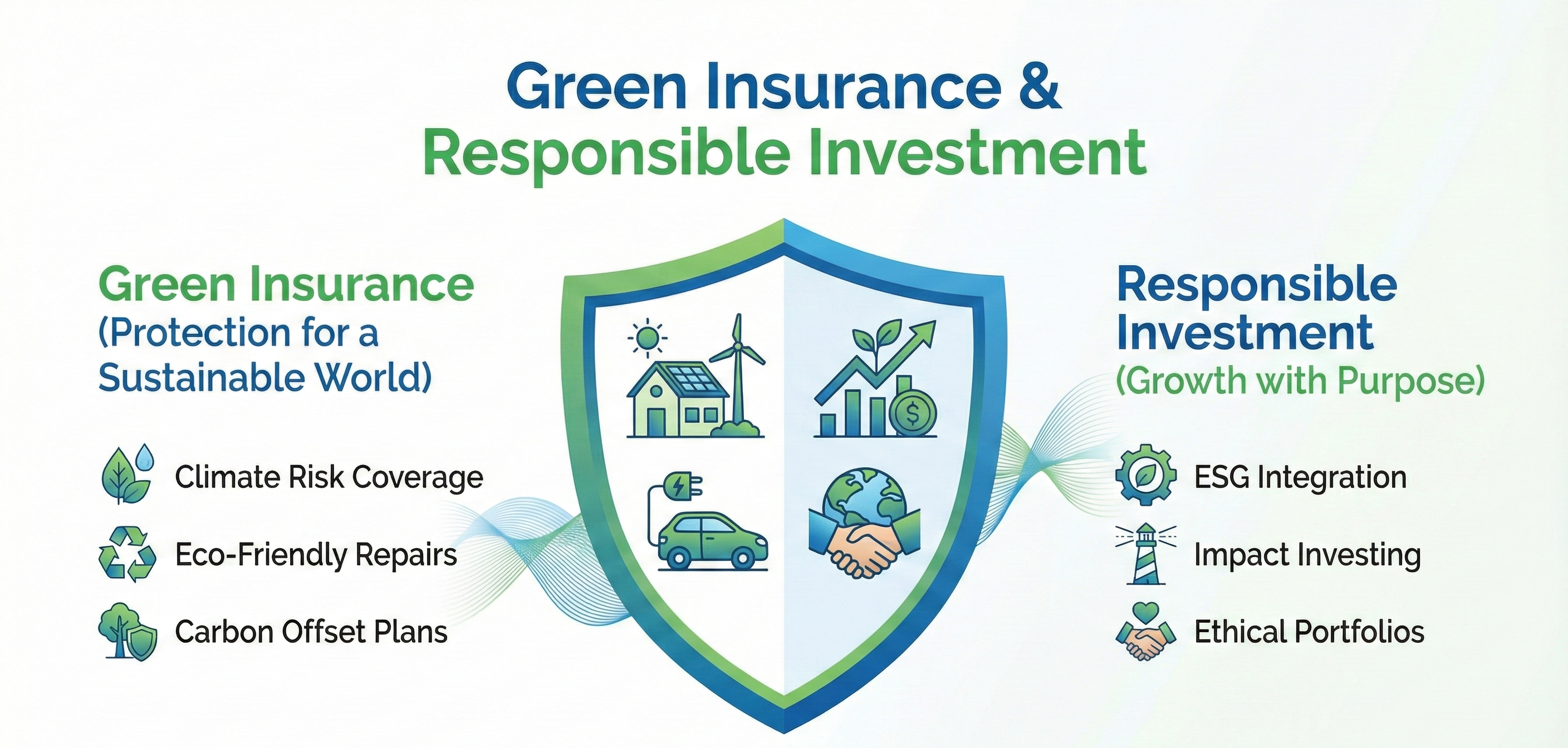
Green Insurance and Responsible Investment
Significance to the Organization
Muang Thai Insurance Public Company Limited recognizes the importance of developing and enhancing insurance products and services that support the transition to a low-carbon economy and sustainable development. The Company acknowledges the role of the insurance industry in managing risk, reducing the vulnerability of the economy and society to climate change, and supporting customers’ long-term adaptation.
The Company focuses on designing insurance coverage for environmentally friendly activities, including renewable energy, electric vehicles, disaster prevention and recovery, and comprehensive climate risk management. Through these efforts, insurance can serve as an important mechanism supporting Thailand’s transition towards a green economy.
In parallel, the Company manages its investment portfolio in accordance with responsible investment principles by systematically integrating environmental, social, and governance factors into its investment decision-making processes. This approach aims to avoid or limit exposure to businesses and activities that may generate significant adverse impacts while supporting investments in companies with appropriate ESG practices, effective risk management, and the capacity to create sustainable long-term value.
The Company’s scope of operations covers both insurance and investment activities. On the insurance side, the Company incorporates environmental and climate-related risk considerations into product design, coverage terms, pricing structures, and underwriting processes. It seeks to support green activities, reduce environmental impacts, and encourage customers to adopt more sustainable practices.
On the investment side, the Company applies responsible investment principles throughout the investment lifecycle, from pre-investment screening to ongoing post-investment monitoring and assessment. It also engages with securities issuers and fund managers on material ESG matters to improve portfolio quality, mitigate long-term risks, and support the sustainable development of the economy and capital markets.
Targets
- Increase the proportion of insurance products that support environmental sustainability, such as electric vehicle insurance and solar energy system insurance.
- Promote investment in assets that meet ESG criteria and reduce exposure to industries with elevated environmental risks.
Implementation
Muang Thai Insurance Public Company Limited systematically advances its Green Insurance and Responsible Investment agenda throughout the year. The Company focuses on achieving tangible outcomes aligned with market needs, evolving risks, and its long-term sustainable development objectives.
As an initial step, the Company assesses and analyses market and customer needs using information on climate-related risk trends, the frequency and severity of natural catastrophes, and opportunities arising from the growth of the green economy. This information supports strategic decision-making and enables the Company to understand the risks faced by different customer segments, industries, and geographical areas. It also helps identify protection gaps, providing an important basis for designing timely and appropriate insurance products and services.
The Company then develops and enhances its insurance products and coverage to balance effective risk management, adequate customer protection, and the Company’s underwriting capacity. Environmental and climate-related considerations are systematically integrated into product-design processes, while underwriting terms and conditions are tailored to the relevant risk characteristics. This approach seeks to balance customer protection, the Company’s financial resilience, and support for environmentally responsible activities.
To expand market access, the Company continuously promotes green insurance products through its distribution channels and partner networks. Its efforts extend beyond product offerings to include educating customers about risk management, loss prevention, and adaptation to climate-related risks. This helps customers make informed decisions and strengthens the value of insurance as a long-term risk management tool.
In parallel, the Company implements responsible investment practices by incorporating ESG factors into investment selection and portfolio management. Appropriate investment assessment and screening criteria have been established, while environmental, social, and governance risks within the investment portfolio are regularly reviewed and monitored. Monitoring results are reported to the relevant oversight functions and management to support decision-making and align investment direction with the Company’s sustainability policy.
Finally, the Company continuously monitors, evaluates, and improves its performance through the establishment and measurement of key performance indicators. It reviews the effectiveness of its insurance products and investment practices and assesses evolving risks, including the increasing frequency of natural catastrophes, physical climate risks, and transition risks associated with the shift towards a low-carbon economy.
Monitoring results are regularly used to refine strategies and operating practices, enabling the Company to respond effectively to sustainability challenges and create long-term value for all stakeholder groups.
Environmental Policies and Measures
The Company’s Environmental Practices
1. Integrating Environmental Policies into Operational Processes
- Establish requirements for the responsible and efficient use of resources to minimize environmental impacts.
- Undertake activities that support the conservation and restoration of natural resources.
- Promote the use of modern technologies to improve operational efficiency while prioritizing environmental responsibility.
- Ensure compliance with applicable environmental laws and regulations.
2. Promoting Environmental Knowledge, Awareness, and Action throughout the Organization
- Assign responsible departments, individuals, and working groups to oversee environmental matters.
- Regularly communicate the Company’s environmental policies to employees, business partners, and customers.
- Implement projects, plans, and activities that continuously encourage employees to increase their environmental awareness and participation.
3. Monitoring Environmental Performance
- Establish quantitative targets and performance measurements for reducing resource consumption, including energy used for electricity and air-conditioning systems, water, paper, and consumable materials.
- Establish quantitative targets and performance measurements for applying circular resource-management principles through reduction, reuse, and recycling.
- Regularly report the results of projects and activities in which employees participate to improve environmental performance.
4. Supporting Environmental Sustainability as an Insurance Company
- Develop and offer insurance products that promote and support environmental sustainability.
- Incorporate environmental sustainability considerations into the selection of business partners and the procurement of goods and services.