Sustainability Overview
Corporate Sustainability Management Policy
Muang Thai Insurance Public Company Limited is committed to conducting its business responsibly with respect to society, the environment, governance, and the economy, while creating shared value in a balanced manner for all stakeholder groups. The Company firmly believes that sustainability is the foundation of credibility, business growth, and public trust.
The Company recognizes the close interconnection between the growth of the insurance business and the stability of the economy, the quality of life of communities, and environmental balance. It is also mindful of emerging challenges, including climate change, increasingly severe natural disasters, demographic shifts, evolving consumer behavior, rapidly changing technologies, stricter regulatory requirements, and growing competition from new industry entrants.
To effectively respond to these changes, the Company has established a clear sustainability framework by integrating sustainability principles into its business strategy, risk management, human capital development, corporate governance practices, and initiatives that create value for society and the environment.
This policy serves as a key guideline for driving the organization forward. It encourages executives and employees at all levels to uphold a balanced consideration of stakeholders’ interests and to ensure that the rights of any stakeholder group are not compromised. The Company also places great importance on collaboration with various sectors of society to support the United Nations Sustainable Development Goals (SDGs), enhance the quality of life of communities, and maintain its long-term competitiveness and business resilience.
Value Chain
Business Value Chain
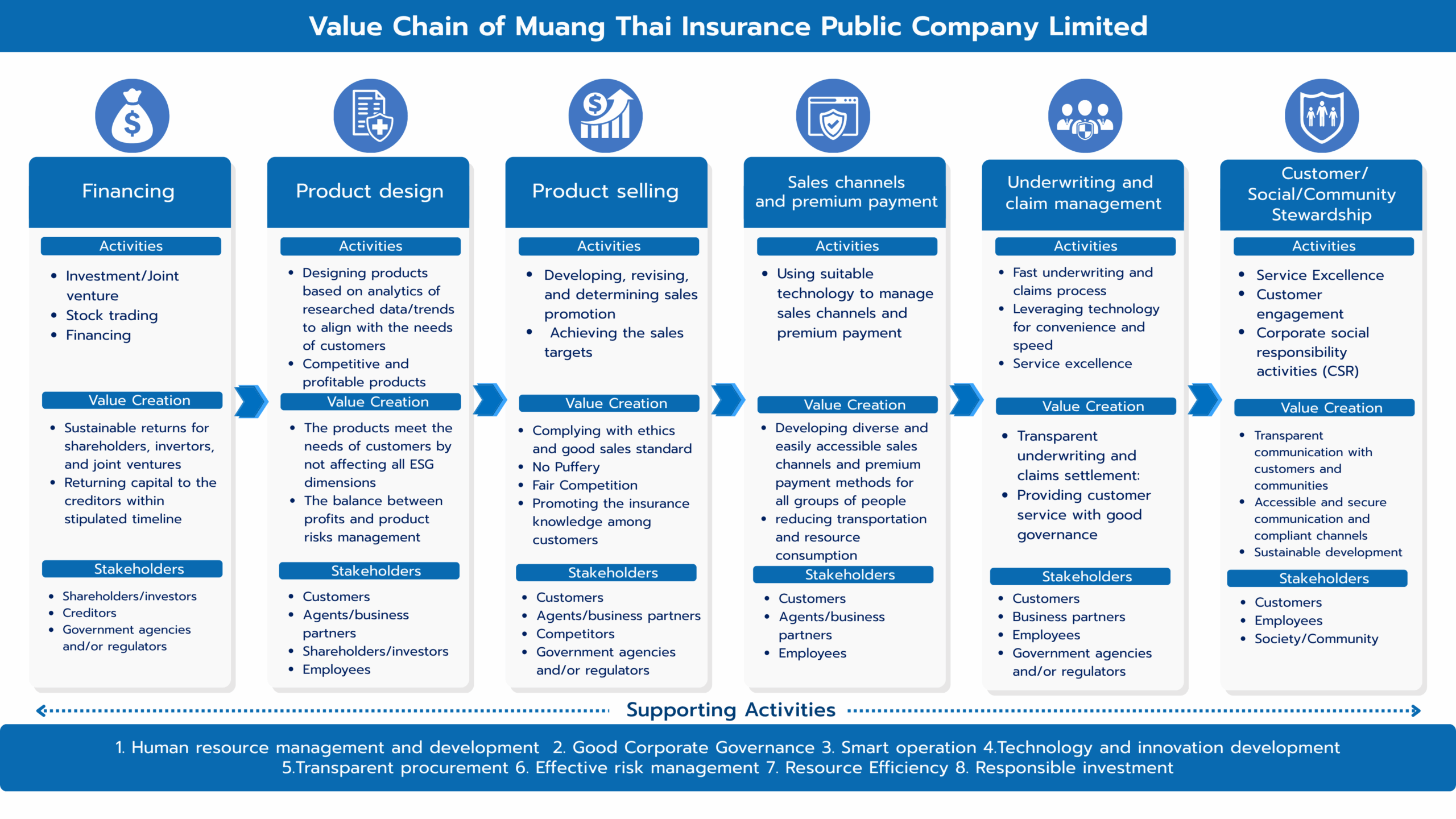
The business operations of Muang Thai Insurance Public Company Limited involve activities that have both direct and indirect impacts on various stakeholder groups. Therefore, to create opportunities, mitigate potential impacts arising from its business activities, and ensure sustainable business growth, the Company has conducted a Business Value Chain Analysis.
This analysis is designed to identify and explain the nature of the Company’s business activities, as well as the value created throughout its operations, as outlined below.
Stakeholder Analysis within the Business Value Chain
The Company places great importance on all stakeholder groups, recognizing that they play a vital role in its business operations. Accordingly, the Company has conducted a stakeholder analysis across its business value chain, from upstream to downstream activities, as well as an assessment of the expectations of both internal and external stakeholders.
This process enables the Company to better understand stakeholder expectations, identify material issues in each area, prevent and manage risks, minimize adverse impacts, and explore business opportunities. It also supports the Company’s commitment to protecting the rights and interests of all stakeholders. The Company shall not engage in any actions that violate the rights of any stakeholder group and adheres to principles that promote fairness and equitable treatment for all parties, including :
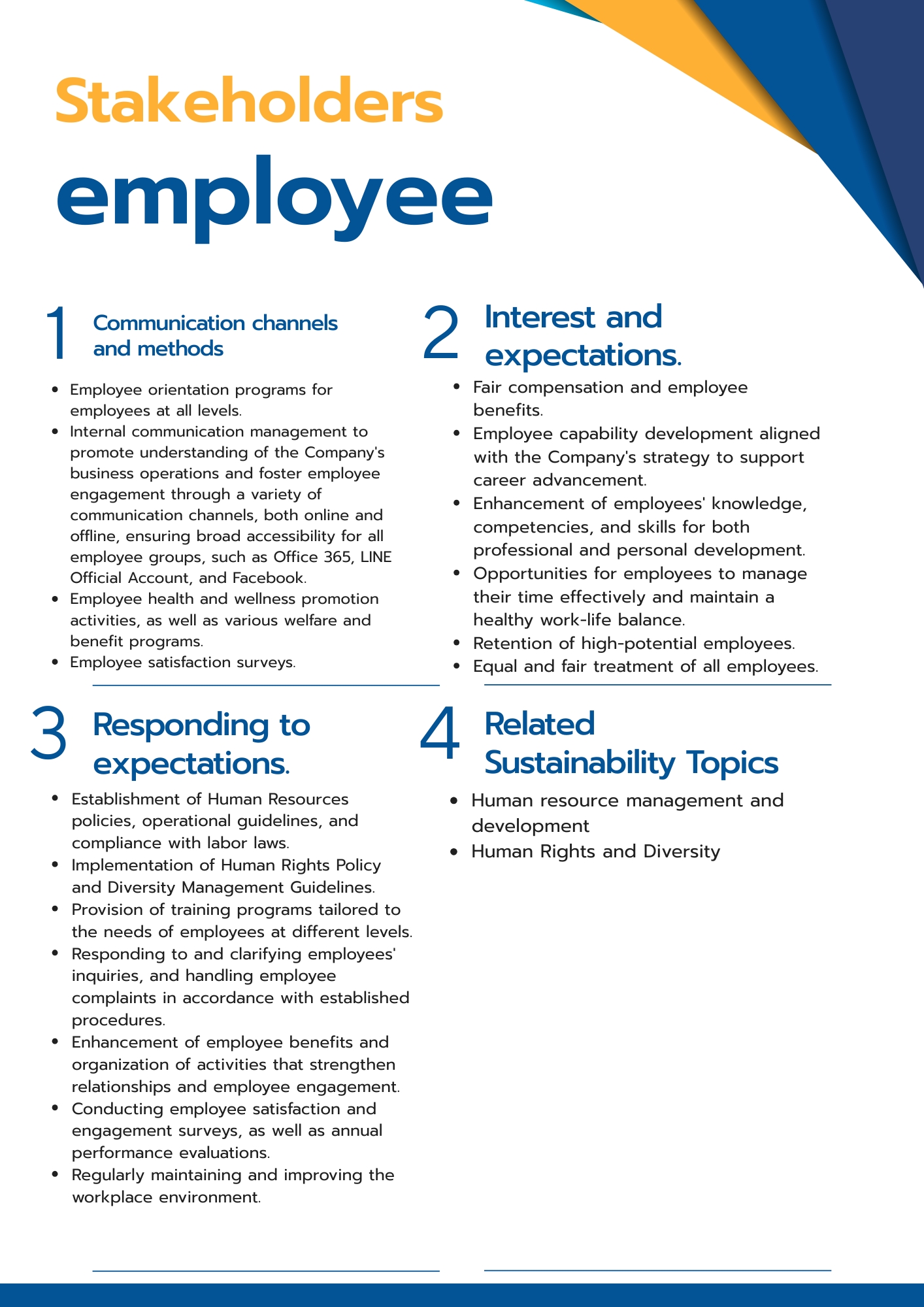
- Employees
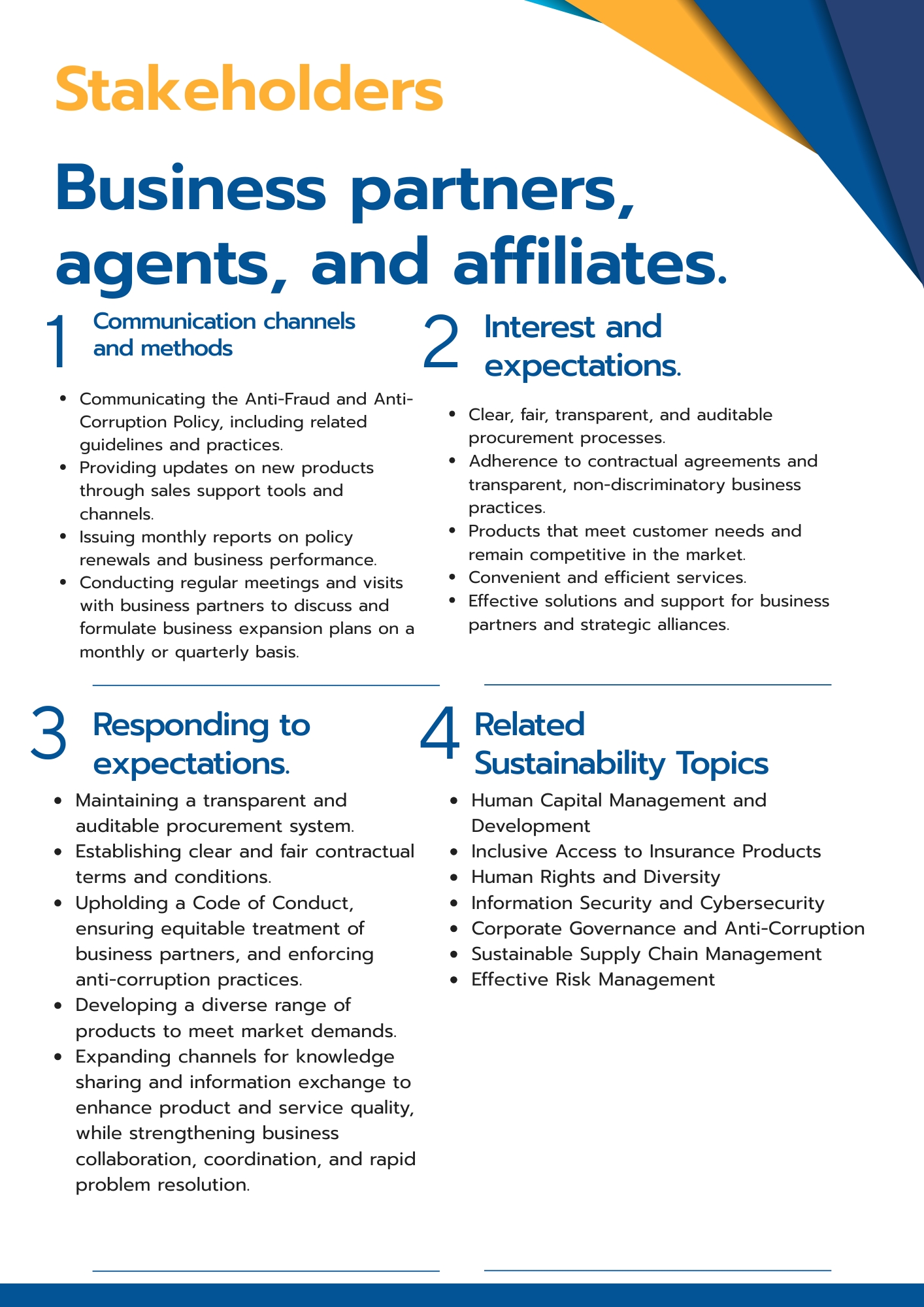
- Business Partners and Suppliers
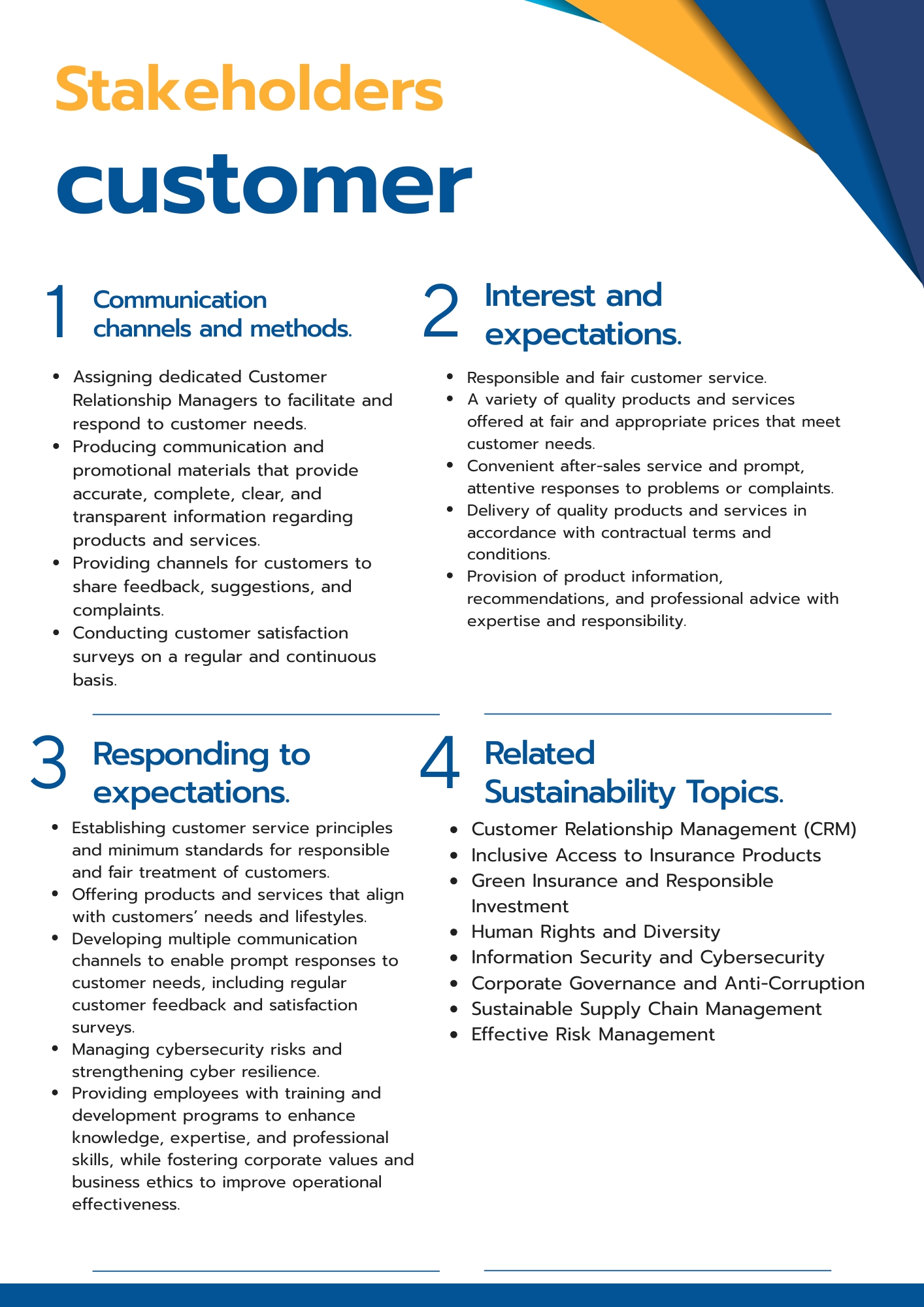
- Customers
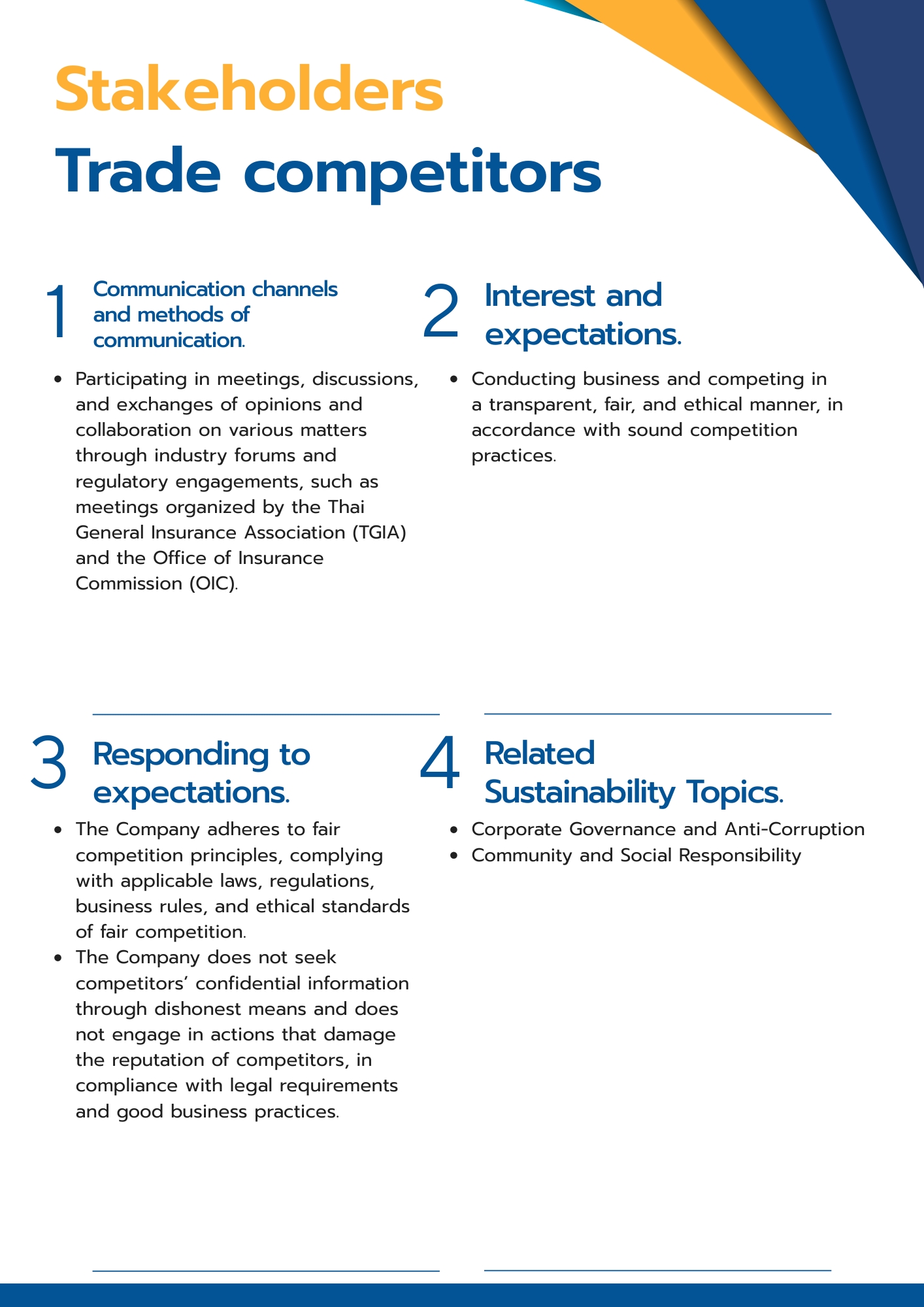
- Competitors
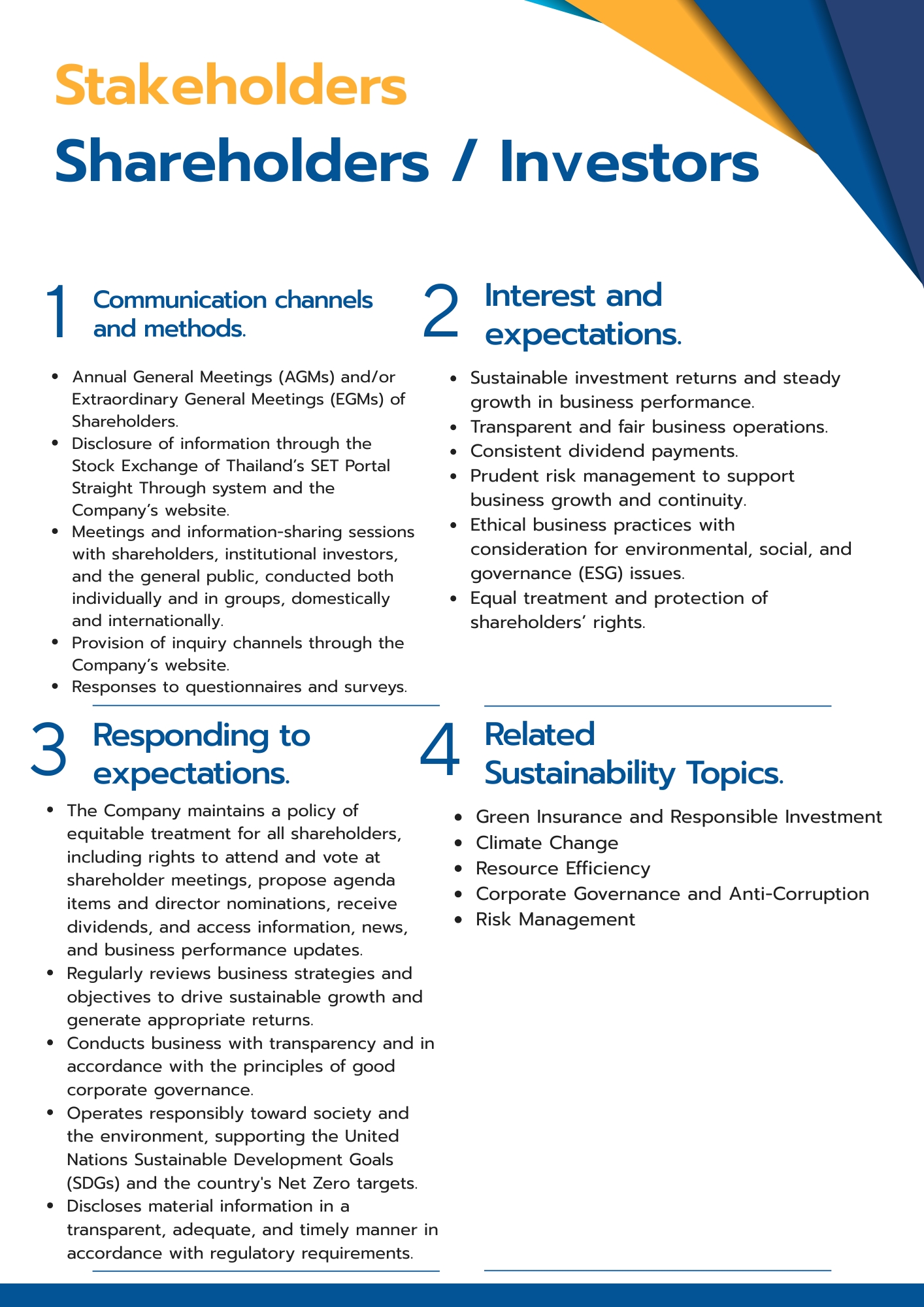
- Shareholders
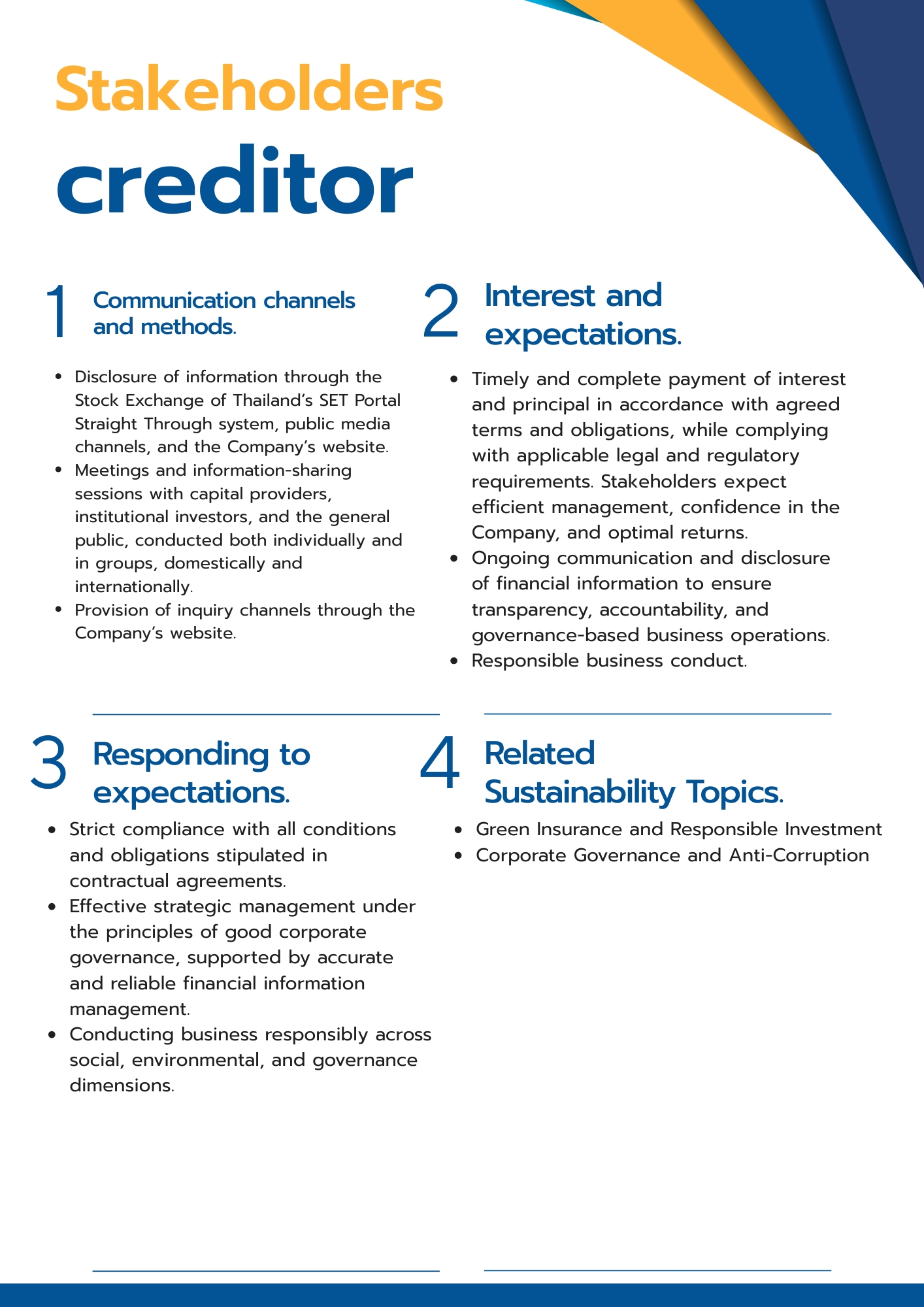
- Creditors
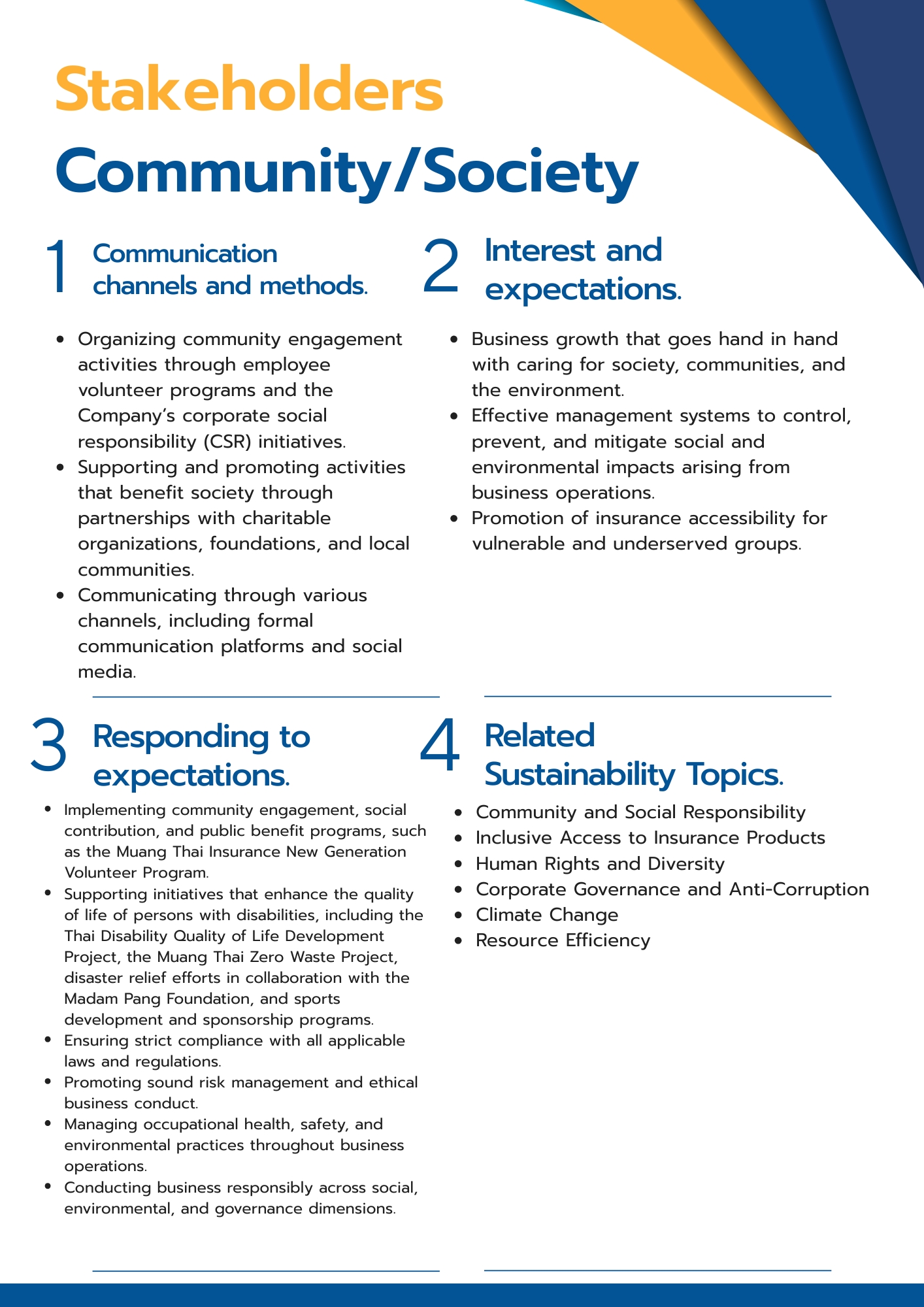
- Communities and Society
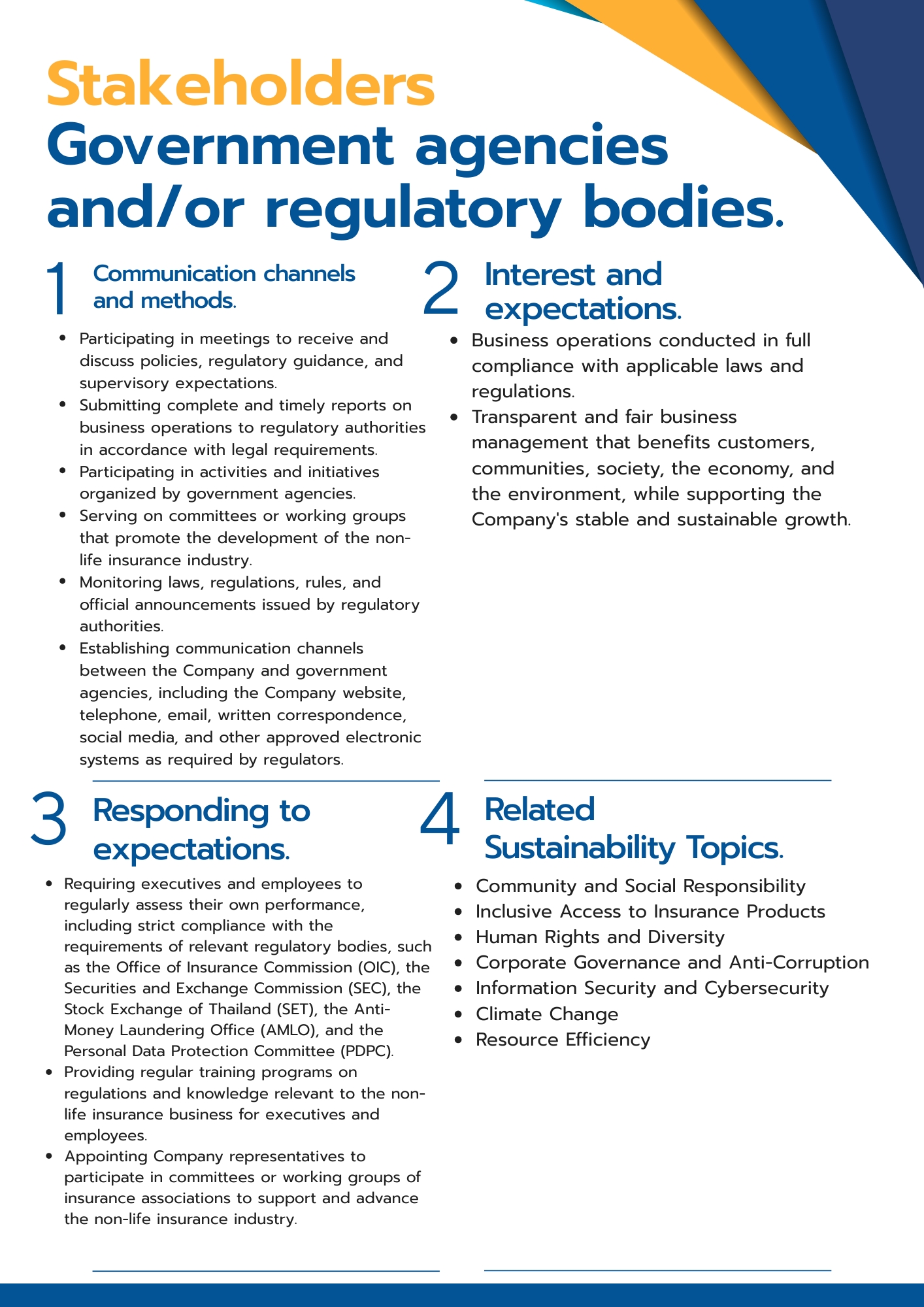
- Government Agencies and/or Regulatory Authorities
In addition, the Company conducts stakeholder prioritization assessments to determine the relative importance and urgency of stakeholder concerns and expectations. The assessment identified the top four priority stakeholder groups as follows :
- Employees
- Customers
- Business Partners and Suppliers
- Government Agencies and/or Regulatory Authorities
The Company has established various communication channels to listen to the needs, opinions, expectations, and recommendations of all stakeholder groups. The information gathered is analyzed and summarized to identify key stakeholder concerns and to develop appropriate engagement and response strategies.
The stakeholder engagement results and proposed approaches are presented to the Corporate Governance and Sustainable Development Committee for consideration and are subsequently reviewed and approved by the Board of Directors prior to public disclosure in the Sustainability Report and the Form 56-1 One Report. Details are provided as follows.
Stakeholder Engagement and Responsiveness Approach


Assessment and Determination of Material Sustainability Topics
Muang Thai Insurance Public Company Limited has conducted a materiality assessment in accordance with the GRI Standards 2021 framework to identify and prioritize sustainability topics that have the most significant impacts on both the Company and its stakeholders. The assessment takes into consideration the interests and concerns of all stakeholder groups, applying principles of business context analysis, stakeholder and capital market perspectives, and alignment with the United Nations Sustainable Development Goals (SDGs). It also incorporates considerations related to corporate governance, risk management, ethics, legal compliance, and social and economic responsibility.
The materiality assessment process consists of the following steps:
The Company studies, gathers, and reviews both internal and external information relevant to its business operations and sustainability context. This includes the Company’s vision, mission, policies, corporate governance framework, industry trends at both national and international levels, and information reflecting the expectations and concerns of stakeholder groups.
The findings are used to identify sustainability topics relevant to the Company’s operating context for the year 2024.
The Company evaluates sustainability matters that may impact both its business and stakeholders through a prioritization process. Assessment criteria include:
- Severity of impact
- Likelihood of occurrence
- Scope of impact
- The Company’s strategic intentions and commitments regarding each issue (Intention)
In addition, the Company analyzes trends, potential increases or decreases in impacts, and possible positive and negative effects on the organization. Consideration is also given to impacts on the environment, society, human rights, and issues identified through due diligence processes.
This assessment results in the identification of the Company’s Material Sustainability Topics.
The identified sustainability topics are presented to the Company’s senior management for review and validation to ensure alignment with corporate policies, business strategies, and the Company’s approach to addressing risks, challenges, and opportunities.
The validation process ensures that the selected material topics are relevant, comprehensive, and aligned with the Company’s business operations. For 2024, the Company identified a total of nine Material Sustainability Topics, which were subsequently submitted to and approved by the Board of Directors.
The Company continuously reviews its sustainability disclosures on an annual basis and evaluates emerging impacts affecting the organization. It also gathers and analyzes feedback and recommendations from stakeholders, while monitoring relevant laws and regulations.
This ongoing review process ensures that the Company’s material sustainability topics remain relevant and aligned with its evolving business operations and sustainability commitments.
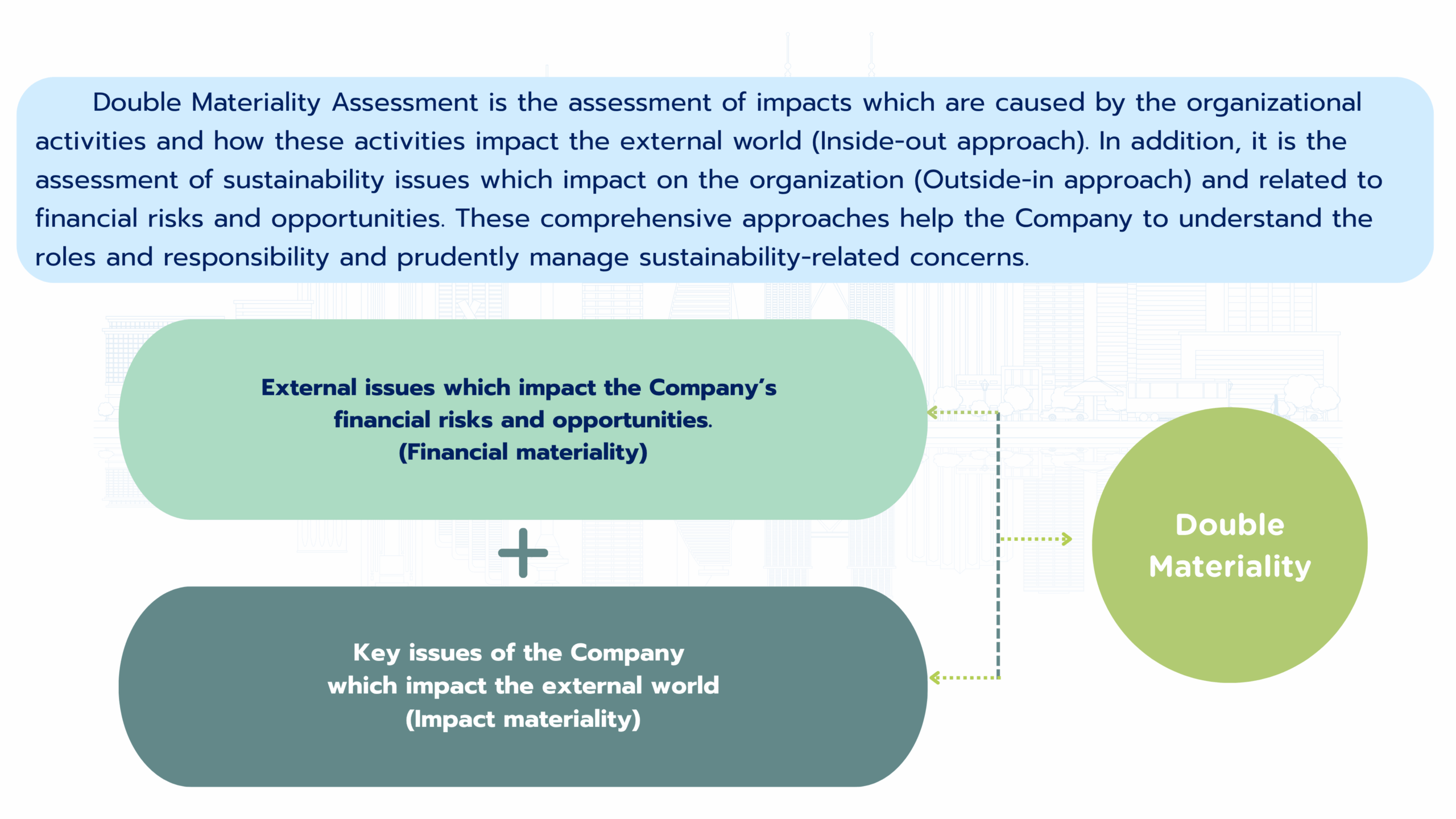
Double Materiality Assessment
Sustainability Material Topics
Environmental Dimension
1.Climate Change
2.Resource Efficiency
3.Green Insurance and Responsible Investment
Social Dimension
1.Human Resource Management and Development
2.Customer Relationship Management
3.Human Rights & Diversity
4.Community and Social Responsibility
5.Inclusive insurance
Governance and Economic Dimension
1.Digital Transformation and Innovation
2.Data Protection & Cybersecurity
3.Corporate Governance and Anti-Corruption
4.Sustainable Supply Chain Management
5.Risk Management
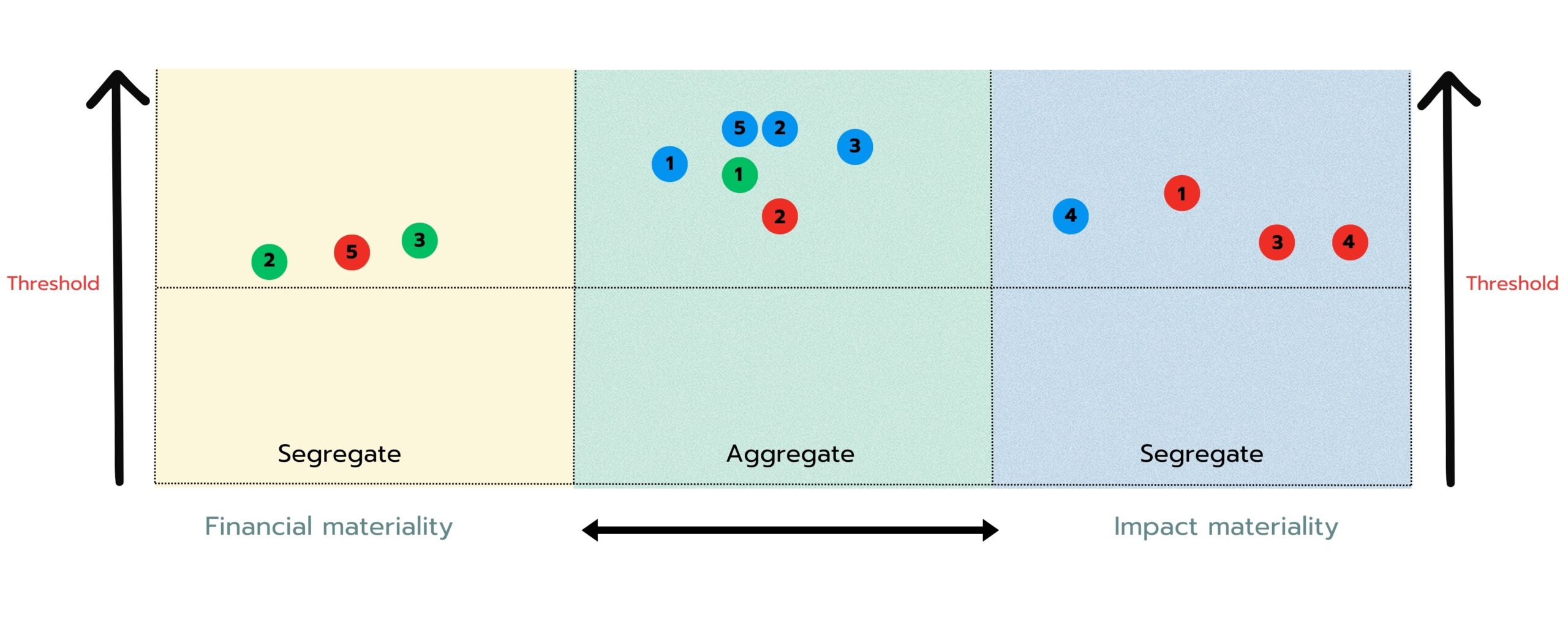
Double Materiality Matrix Analysis
Double Materiality Matrix Assessment Results
The Company has conducted a comprehensive assessment of actual and potential impacts, covering both positive and negative effects across the environmental, social, and governance dimensions. The assessment takes into account impacts on the Company and its stakeholders throughout the value chain, as well as alignment with the United Nations Sustainable Development Goals (SDGs). The details are as follows:
Environmental Dimension
Sustainable Development Goals (SDGs)
Impact / Opportunity on the Organization (Inside-out & Financial Materiality)
Climate change increases claims-related risks and financial volatility. However, effective management of these risks can create new business opportunities through Green Insurance products and Climate Risk Solutions.
Impact / Opportunity on Stakeholders (Outside-in & Impact Materiality)
Customers, communities, and society benefit from enhanced risk protection and improved resilience and adaptation capabilities in response to climate-related disasters.
Impact / Opportunity on the Organization (Inside-out & Financial Materiality)
Efficient resource utilization helps reduce operational costs, supports the Company’s Carbon Neutrality goals, and enhances overall organizational efficiency.
Impact / Opportunity on Stakeholders (Outside-in & Impact Materiality)
Promotes the conservation of natural resources and encourages environmentally responsible behavior among employees and customers.
Impact / Opportunity on the Organization (Inside-out & Financial Materiality)
Creates new revenue streams, reduces ESG-related risks within the investment portfolio, and strengthens the Company’s competitive advantage.
Impact / Opportunity on Stakeholders (Outside-in & Impact Materiality)
Enables customers and investors to participate in the development of a green economy and supports the transition toward a low-carbon economy.


MTI plays a systemic role in supporting SDG 13: Climate Action through climate risk management, the development of insurance products that help mitigate the impacts of natural disasters, and initiatives that enhance the resilience and adaptive capacity of businesses and communities in response to climate-related risks.
At the same time, the Company’s efforts to reduce greenhouse gas emissions from its operations and promote the use of clean energy contribute to SDG 7: Affordable and Clean Energy and support the transition toward a low-carbon economy.
MTI’s initiatives to reduce energy consumption, water usage, and resource utilization throughout its operations, including the adoption of digital systems to replace paper-based processes, help minimize resource consumption and waste generation.
These efforts directly support SDG 12: Responsible Consumption and Production and also contribute to the reduction of greenhouse gas emissions, thereby supporting SDG 13: Climate Action through a prevention-based approach.
MTI supports SDG 9: Industry, Innovation and Infrastructure and SDG 13: Climate Action through the development of insurance solutions for clean energy technologies, such as Electric Vehicle (EV) Insurance and Solar Panel Insurance, as well as through environmental initiatives and projects.
In addition, the Company promotes responsible investment practices by allocating investment capital in a manner that reduces support for activities with negative environmental impacts while encouraging sustainable consumption and investment, in alignment with SDG 12: Responsible Consumption and Production.
มิติสังคม
ผลกระทบ / โอกาสต่อองค์กร (Inside-out & Financial Materiality)
เพิ่มประสิทธิภาพองค์กรและขีดความสามารถในการแข่งขัน หากบริหารไม่ดีอาจเกิดปัญหาขาดแคลนบุคลากร
ผลกระทบ / โอกาสต่อผู้มีส่วนได้เสีย (Outside-in & Impact Materiality)
พนักงานมีโอกาสเติบโต ความมั่นคง และคุณภาพชีวิตที่ดี
ผลกระทบ / โอกาสต่อองค์กร (Inside-out & Financial Materiality)
เพิ่มความเชื่อมั่น ความภักดี และภาพลักษณ์องค์กร ลดความเสี่ยงด้านข้อร้องเรียน
ผลกระทบ / โอกาสต่อผู้มีส่วนได้เสีย (Outside-in & Impact Materiality)
ลูกค้าได้รับบริการที่เป็นธรรม โปร่งใส และมีคุณภาพ
ผลกระทบ / โอกาสต่อองค์กร (Inside-out & Financial Materiality)
ลดความเสี่ยงด้านกฎหมายและชื่อเสียง เสริมวัฒนธรรมองค์กรที่เป็นธรรม
ผลกระทบ / โอกาสต่อผู้มีส่วนได้เสีย (Outside-in & Impact Materiality)
พนักงาน ลูกค้า และคู่ค้าได้รับการปฏิบัติอย่างเท่าเทียม
ผลกระทบ / โอกาสต่อองค์กร (Inside-out & Financial Materiality)
ขยายฐานลูกค้าใหม่และสร้างคุณค่าทางสังคมควบคู่ธุรกิจ
ผลกระทบ / โอกาสต่อผู้มีส่วนได้เสีย (Outside-in & Impact Materiality)
กลุ่มเปราะบางและผู้มีรายได้น้อยเข้าถึงการบริหารความเสี่ยง
ผลกระทบ / โอกาสต่อองค์กร (Inside-out & Financial Materiality)
เสริมความเชื่อมั่นและ Social License to Operate เชื่อม CSR กับ Core Business
ผลกระทบ / โอกาสต่อผู้มีส่วนได้เสีย (Outside-in & Impact Materiality)
ชุมชนและสังคมได้รับการพัฒนาและมีความเข้มแข็ง

การพัฒนาทักษะ การสร้างสภาพแวดล้อมการทำงานที่ปลอดภัย และโอกาสความก้าวหน้าอย่างเป็นธรรม สนับสนุนการจ้างงานที่มีคุณค่า (Decent Work) ตาม SDG 8 และการเรียนรู้ตลอดชีวิตตาม SDG 4
การให้ข้อมูลที่โปร่งใส การคุ้มครองข้อมูลส่วนบุคคล และการจัดการข้อร้องเรียนอย่างเป็นธรรม สนับสนุนสถาบันที่เข้มแข็งและความยุติธรรมตาม SDG 16 รวมถึงการบริโภคอย่างรับผิดชอบตาม SDG 12
MTI สนับสนุนความเท่าเทียมทางเพศและการไม่เลือกปฏิบัติในสถานที่ทำงานและการให้บริการ ต่อต้านความรุนแรง ตาม SDG 5 ช่วยลดความเหลื่อมล้ำและสร้างสังคมที่ทุกคนมีโอกาสเท่าเทียม ตาม SDG 10
การออกแบบผลิตภัณฑ์ประกันภัยที่เข้าถึงได้ มีเบี้ยประกันที่เหมาะสม และเงื่อนไขที่เข้าใจง่ายสำหรับกลุ่มรายได้น้อย ผู้ประกอบการรายย่อย และกลุ่มเปราะบาง ช่วยลดความเสี่ยงทางเศรษฐกิจและเพิ่มการเข้าถึงการคุ้มครองอย่างเท่าเทียม สนับสนุนการขจัดความยากจนตาม SDG 1 และการลดความเหลื่อมล้ำในสังคมตาม SDG 10 รวมทั้งร่วมมือกับภาครัฐ หน่วยงานกำกับ และภาคเอกชนในการส่งเสริมให้กลุ่มเปราะบางและผู้มีรายได้น้อยมีโอกาสเข้าถึงการประกันภัยอย่างเหมาะสม SDG 17
การดำเนินโครงการพัฒนาชุมชน การเสริมสร้างความรู้ด้านการบริหารความเสี่ยง และการสนับสนุนการฟื้นฟูหลังเกิดภัยพิบัติ ช่วยเสริมสร้างความเข้มแข็งและความยืดหยุ่นของชุมชน ลดความเปราะบางทางเศรษฐกิจของครัวเรือน สนับสนุนการพัฒนาเมืองและชุมชนอย่างยั่งยืนตาม SDG 11 และช่วยป้องกันการตกสู่ความยากจนจากความเสี่ยงที่ไม่คาดคิดตาม SDG 1
มิติธรรมาภิบาล (Governance)
ผลกระทบ / โอกาสต่อองค์กร (Inside-out & Financial Materiality)
เพิ่มประสิทธิภาพ ลดต้นทุน และยกระดับประสบการณ์ลูกค้า
ผลกระทบ / โอกาสต่อผู้มีส่วนได้เสีย (Outside-in & Impact Materiality)
ลูกค้าและพนักงานได้รับบริการและเครื่องมือที่ทันสมัย
ผลกระทบ / โอกาสต่อองค์กร (Inside-out & Financial Materiality)
ลดความเสี่ยงด้านกฎหมาย ความเสียหายทางการเงิน และชื่อเสียงองค์กร
ผลกระทบ / โอกาสต่อผู้มีส่วนได้เสีย (Outside-in & Impact Materiality)
ลูกค้าและคู่ค้ามั่นใจในการคุ้มครองข้อมูลส่วนบุคคล
ผลกระทบ / โอกาสต่อองค์กร (Inside-out & Financial Materiality)
เสริมความเชื่อมั่นนักลงทุน ลดความเสี่ยงด้านกฎหมายและจริยธรรม
ผลกระทบ / โอกาสต่อผู้มีส่วนได้เสีย (Outside-in & Impact Materiality)
ผู้มีส่วนได้เสียได้รับความเป็นธรรมและความโปร่งใส
ผลกระทบ / โอกาสต่อองค์กร (Inside-out & Financial Materiality)
ลดความเสี่ยง ESG จากคู่ค้าและห่วงโซ่อุปทาน
ผลกระทบ / โอกาสต่อผู้มีส่วนได้เสีย (Outside-in & Impact Materiality)
คู่ค้าได้รับการพัฒนาและยกระดับมาตรฐานการดำเนินงาน
ผลกระทบ / โอกาสต่อองค์กร (Inside-out & Financial Materiality)
เพิ่มความมั่นคงและความยั่งยืนของธุรกิจ รองรับความเสี่ยงใหม่ (Climate / ESG / Cyber)
ผลกระทบ / โอกาสต่อผู้มีส่วนได้เสีย (Outside-in & Impact Materiality)
นักลงทุน ลูกค้า และสังคมมั่นใจในเสถียรภาพองค์กร

การนำเทคโนโลยีดิจิทัลมาใช้ในการพัฒนากระบวนการทำงาน ระบบบริการ และช่องทางการให้บริการลูกค้า ช่วยเพิ่มประสิทธิภาพ ลดต้นทุนการดำเนินงาน และยกระดับโครงสร้างพื้นฐานด้านการเงินและการบริการให้มีความทันสมัยและเข้าถึงได้มากขึ้น สนับสนุนการพัฒนาโครงสร้างพื้นฐาน นวัตกรรม และอุตสาหกรรมที่ยั่งยืนตาม SDG 9

การคุ้มครองข้อมูลส่วนบุคคล การบริหารจัดการความมั่นคงปลอดภัยทางไซเบอร์ และการป้องกันการละเมิดข้อมูล ช่วยสร้างความเชื่อมั่นของลูกค้า คู่ค้า และผู้มีส่วนได้เสียต่อระบบบริการทางการเงินและการประกันภัย ส่งเสริมสถาบันที่มีความน่าเชื่อถือ โปร่งใส และมีธรรมาภิบาล สนับสนุนสถาบันที่เข้มแข็งและความยุติธรรมตาม SDG 16

การกำหนดโครงสร้างการกำกับดูแลกิจการที่โปร่งใส การปฏิบัติตามหลักจริยธรรมทางธุรกิจ และมาตรการป้องกันและต่อต้านการทุจริตคอร์รัปชัน ช่วยเสริมสร้างความเชื่อมั่นของนักลงทุน ผู้ถือหุ้น และตลาดทุน รวมถึงลดความเสี่ยงด้านกฎหมายและชื่อเสียงขององค์กร สนับสนุนการพัฒนาองค์กรที่มีธรรมาภิบาล ความโปร่งใส และความรับผิดชอบตาม SDG 16

การคัดเลือก ประเมิน และติดตามคู่ค้าด้วยเกณฑ์ด้านสิ่งแวดล้อม สังคม และธรรมาภิบาล (ESG) ช่วยยกระดับมาตรฐานแรงงาน ความปลอดภัย และการจัดการสิ่งแวดล้อมตลอดห่วงโซ่อุปทาน สนับสนุนรูปแบบการผลิตและการบริโภคที่รับผิดชอบตาม SDG 12 และส่งเสริมการจ้างงานที่มีคุณค่าและการเติบโตทางเศรษฐกิจอย่างยั่งยืนตาม SDG 8

การพัฒนาระบบบริหารความเสี่ยงที่ครอบคลุมความเสี่ยงด้าน ESG ความเสี่ยงจากการเปลี่ยนแปลงสภาพภูมิอากาศ และความเสี่ยงเชิงกลยุทธ์ ช่วยเสริมสร้างเสถียรภาพทางการเงิน ความต่อเนื่องทางธุรกิจ และความเชื่อมั่นของนักลงทุน ลูกค้า และผู้มีส่วนได้เสีย สนับสนุนการเติบโตทางเศรษฐกิจอย่างมั่นคงตาม SDG 8 และเสริมสร้างสถาบันที่เข้มแข็งและมีธรรมาภิบาลตาม SDG 16
Sustainability Strategy and Targets
Sustainability Strategy Framework
Muang Thai Insurance has established its sustainability strategy and targets in alignment with its role as a “risk manager for society.” The Company integrates Environmental, Social, and Governance (ESG) considerations into its corporate strategy, business operations, and decision-making processes at every level. This approach strengthens business resilience while creating long-term value for all stakeholders.
The Company’s sustainability strategy is aligned with the United Nations Sustainable Development Goals (SDGs) that are relevant to the insurance industry and Thailand’s national context. It seeks to address key challenges, including climate change, social inequality, digital transformation, and governance-related risks.
Muang Thai Insurance places strong emphasis on managing climate-related risks and promoting efficient resource utilization. The Company is committed to reducing the environmental impacts of its internal operations while integrating environmental considerations into underwriting, investment decisions, and its value chain. These efforts support the transition to a low-carbon economy and enhance the long-term resilience of customers and society.
Material Sustainability Topics
- Climate Change
- Resource Efficiency
- Environmentally Responsible Insurance Products and Responsible Investment
The Company is committed to creating value for society through risk protection, human capital development, and fair stakeholder engagement. It places importance on human rights, equality, safety, and inclusive access to insurance services in order to improve quality of life and strengthen the well-being of Thai society.
Material Sustainability Topics
- Human Capital Management and Development
- Customer Relationship Management
- Promotion of Human Rights and Diversity
- Community and Social Responsibility
- Inclusive Access to Insurance Products for All Groups
Muang Thai Insurance conducts its business in accordance with the principles of good corporate governance, transparency, and accountability. The Company leverages digital technologies and innovation to enhance its operations while maintaining strong commitments to personal data protection, cybersecurity, and anti-corruption practices. These efforts strengthen stakeholder confidence and support the Company’s long-term sustainability and competitiveness.
Material Sustainability Topics
- Digital Transformation and Innovation
- Information Security and Cybersecurity
- Corporate Governance and Anti-Corruption
- Sustainable Supply Chain Management
- Effective Risk Management
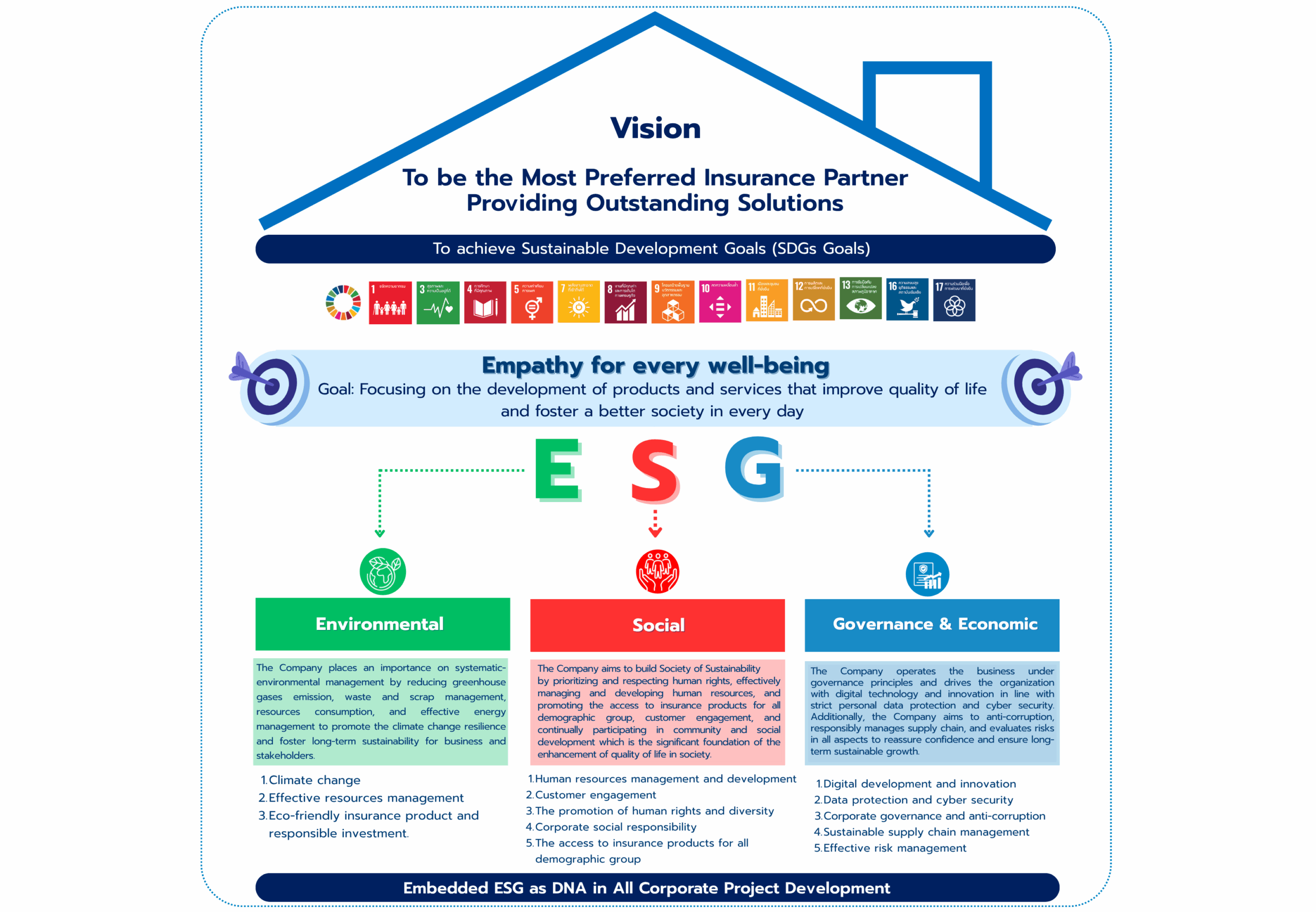
Muang Thai Insurance integrates sustainability into every stage of its operations, from strategic planning and product development to risk management, investment activities, and corporate governance. The Company aims to embed sustainability as part of its “organizational DNA”, making it the foundation for stable and long-term growth.
The Company has established its sustainability agenda under the concept of “Empathy for Every Well-being.” This reflects its commitment to developing products and services that help improve people’s lives and contribute to a better society every day.
To achieve this vision, the Company has developed a sustainability-driven business framework based on the principles of Good Corporate Governance and responsible business practices. The framework encompasses key Environmental, Social, Governance, and Economic (ESG) issues and is integrated into the operational plans of relevant business functions across the organization.
The sustainability framework is structured around three dimensions, ensuring that sustainability considerations are systematically embedded throughout the Company’s business operations and decision-making processes.